New York makes T-Mobile drop data caps on low-income home internet
New York's attorney general and governor say T-Mobile must deliver 25 Mbps on its low-income home internet plan instead of cutting it to 650 Kbps after 50 GB. A 'temporary' congestion slowdown is still allowed, and nobody has said how long one can last.
views
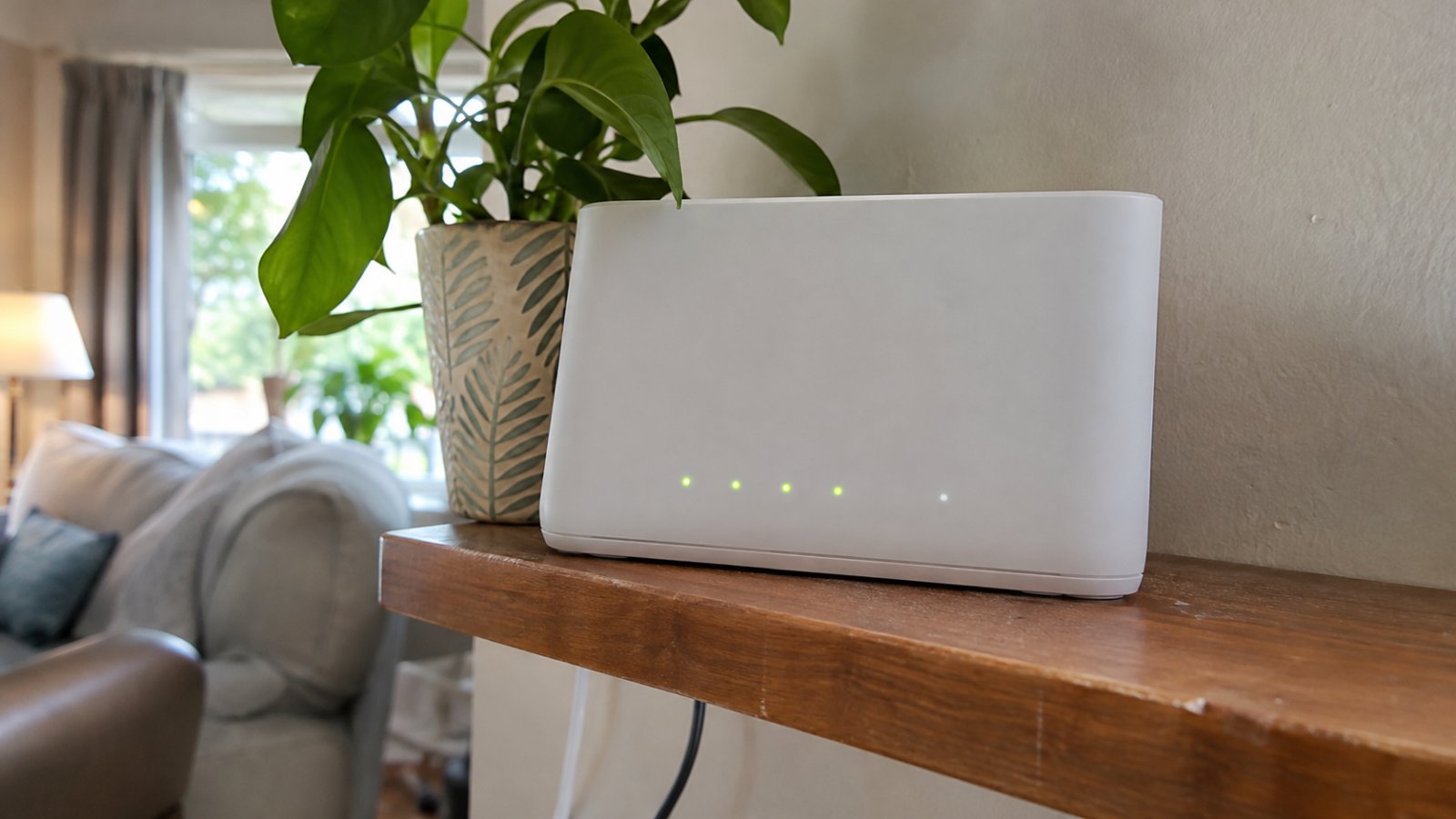
New York's attorney general and governor say T-Mobile must stop throttling its low-income home internet customers after 50 GB a month, and T-Mobile says it is changing the plan to comply.
On November 9, 2026, New York Attorney General Letitia James and Governor Kathy Hochul announced that T-Mobile must stop capping data on the home internet plan it sells to low-income households in New York under the state's Affordable Broadband Act, which the release shortens to ABA. Under the terms set out in the attorney general's release, T-Mobile must deliver 25 Mbps to its ABA subscribers, which is the minimum speed the statute attaches to its fifteen-dollar price cap, subject to one exception for network congestion.
The text of the law, which sits in the General Business Law, gives a provider two ways to comply: broadband at 25 Mbps or faster for no more than fifteen dollars a month, or 200 Mbps or faster for no more than twenty dollars. The statute says the capped price is "inclusive of any recurring taxes and fees such as recurring rental fees for service provider equipment," so for a home connection that runs through a gateway supplied by the provider, the monthly rental counts toward the fifteen or twenty dollars rather than appearing on top of it. Prices can rise each year only by the lesser of the most recent change in the consumer price index or 2%, so the 2% figure acts as a ceiling whenever the index climbs faster. Providers also have to "make all commercially reasonable efforts to promote and advertise the availability" of the plans, and that includes their websites. The attorney general enforces the law, and in a case that reaches court the judge may impose a civil penalty of not more than one thousand dollars per violation.
The attorney general's release sets out what T-Mobile did. After an ABA customer used 50 gigabytes of data in a month, the company cut the connection to 650 Kilobits per second, and the release says a typical customer could reach that 50 GB line in about four days, which would leave such a customer the remaining three weeks or more of the month at the reduced speed. A speed of 650 Kbps is less than a thirtieth of the 25 Mbps the statute names as its minimum, so the throttled plan ran far below the floor the law sets for that price. T-Mobile must also make its ABA page discoverable by search engines, a more specific duty than the statute's general requirement that providers promote and advertise the plans.
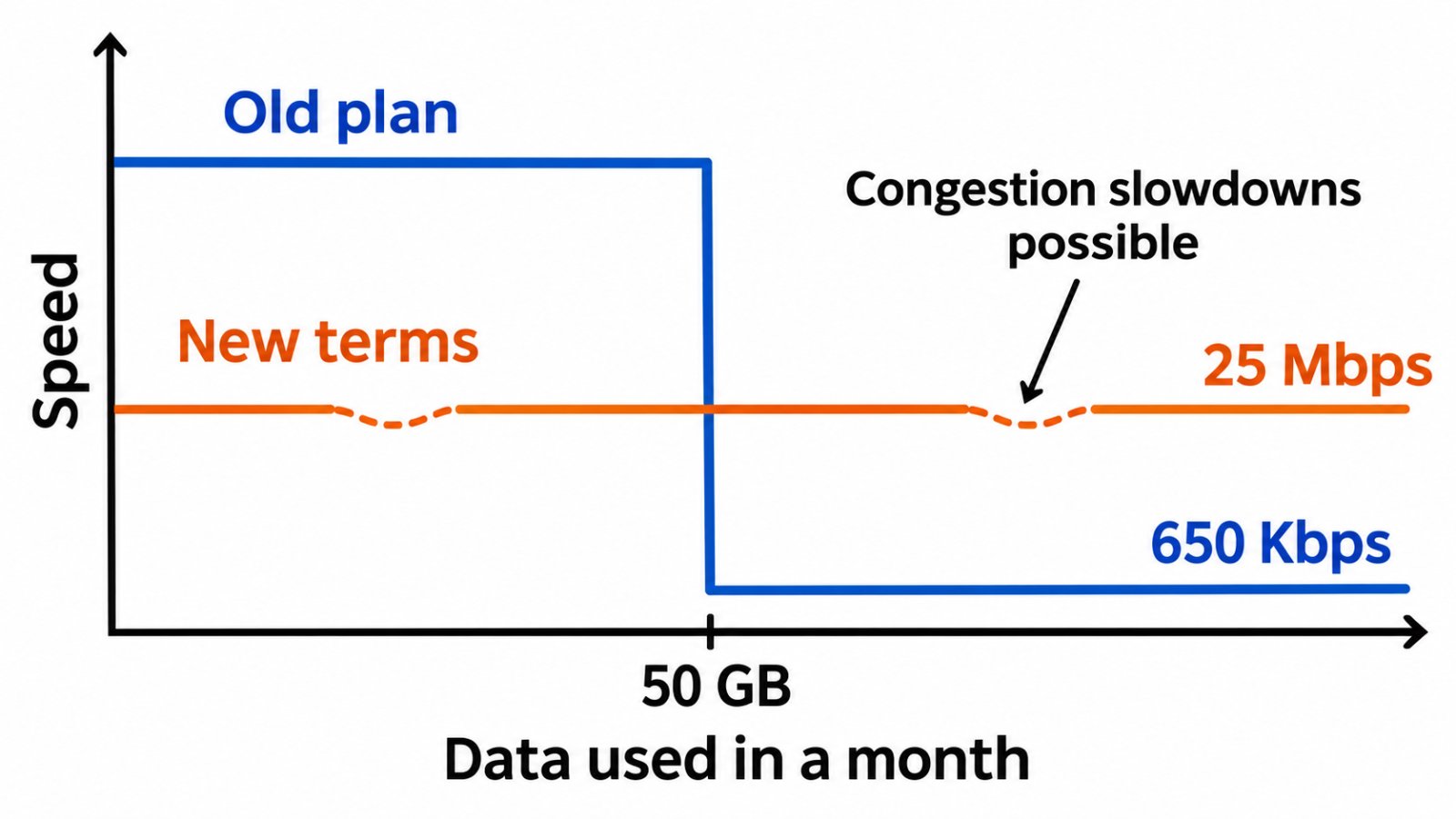
T-Mobile responded in a statement to Engadget, added to the report in an update dated November 11, two days after the announcement: "We're updating our plan to meet the state's requirements while maintaining the same low price." The quoted sentence does not mention the old cap, and it does not name the price, so the figure behind "the same low price" is not given there. Engadget also quotes James on the company's conduct: "Reliable and affordable internet service is a basic need for all New Yorkers, but T-Mobile flouted the law." The 25 Mbps requirement has an exception, since the release keeps the speed in place "unless network congestion requires temporary reductions," so slowdowns remain possible under the new terms, and the release neither defines congestion nor says how long a reduction can last. Several other points are still unknown. No start date for the uncapped plan has been announced. The statute allows a court to impose up to one thousand dollars per violation, but no penalty figure against T-Mobile has been announced, and how violations would be counted in this case has not been stated. It is also unknown whether customers throttled under the old cap will receive refunds or credits, whether existing ABA customers must ask for the change or will be moved across automatically, and how the state will check that subscribers actually receive 25 Mbps.
Medicaid, SNAP, the Home Energy Assistance Program or a utility affordability program, free or reduced-price school lunch, and the Senior Citizen and Disability Rent Increase Exemptions, known as SCRIE and DRIE, are the benefits the release lists, and a household qualifies if at least one of its members is currently receiving any of them. Because the test runs through any member of the household, a benefit received by a child, such as free school lunch, or by an older tenant under SCRIE counts for the whole household. The release also describes a separate route to eligibility based on household income. Complaints about a provider go to the attorney general, the office the statute puts in charge of enforcement, either through the online complaint page listed in the release or by phone on 1-800-771-7755.
The statute applies to broadband providers generally, and it lets the Public Service Commission exempt small providers serving no more than twenty thousand households, a threshold set far below the size of a national carrier such as T-Mobile. How other providers' discounted plans in New York compare with T-Mobile's on data caps, delivered speeds or fees has not been reported, and no action against any other provider under the law has been reported either.
That leaves the congestion exception. The old cap came with figures anyone could check against a speed test and a calendar: 50 GB, then 650 Kbps, reached by a typical customer in about four days on the attorney general's own estimate. The new terms allow "temporary reductions" during network congestion, so New York has swapped a limit anyone could measure for an adjective. How long "temporary" can last, the release does not say.

Callum Brierley
I write about tech rules and privacy law plus court rulings and school policy.
View profile
Leave a Comment