Newborn hepatitis B doses within a day fell to 65.6% in US records
In records from participating US health systems, hepatitis B doses within a day of birth fell to 65.6% in January to June 2026, a slide that began in 2023. It covers why babies of negative mothers still get the dose, who misses it and what changes if the first dose waits until 2 months.
views
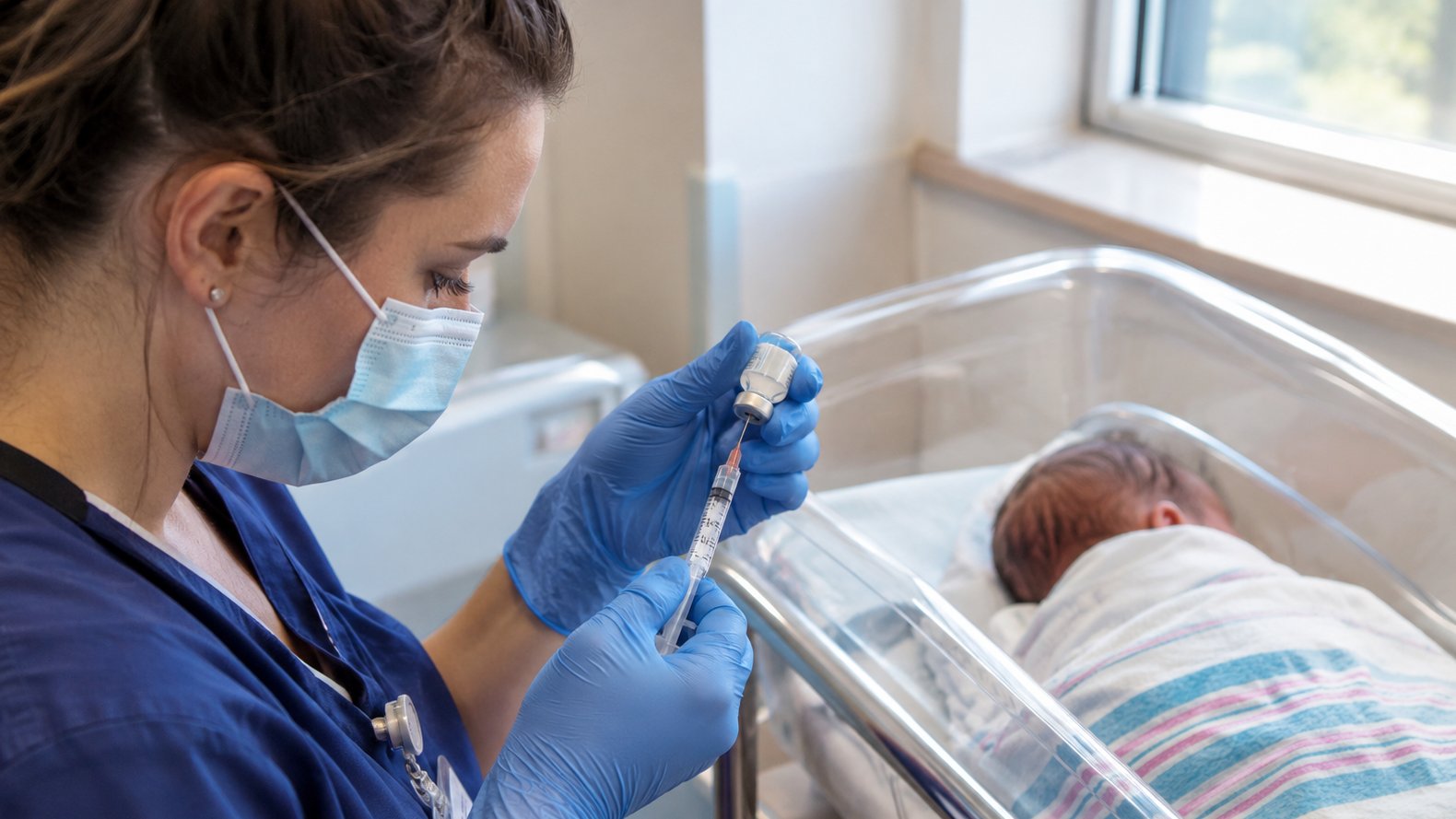
The CDC's clinical guidance says every baby should get a first dose of hepatitis B vaccine at birth, whatever the mother's test result. For a baby of 2,000 grams or more, that means within 24 hours if she tested negative. It means within 12 hours if she tested positive or her status is unknown.
A Truveta analysis in NEJM Evidence, published Nov 24, 2026, counted who actually gets that dose. Led by Nina B. Masters, it drew on de-identified health records from participating US health systems, covering 1,338,961 infants born from January 2018 to June 2026. In those records, the share given the dose within one day of birth fell to 65.6% from January to June 2026.
How does a baby catch hepatitis B if the mother tested negative?
An infected infant has about a 90% chance of developing a chronic infection, the CDC says. Without prophylaxis, about one-fourth of chronically infected infants die of chronic liver disease.
The virus travels in blood, semen and other body fluids, even in microscopic amounts. It does not spread through kissing, hugging, coughing, sharing utensils or breastfeeding. A mother's negative test speaks only for the mother. The CDC lists a household member with the virus as a separate risk factor. If anyone the baby will live with has hepatitis B, tell the pediatrician.
The CDC also calls the birth dose a safety net because "testing and documentation errors do occur." The dose covers babies whose mother's status is unknown or wrongly documented. Masters describes the same gap from the mother's side. Not every mother is tested in pregnancy, and not every tested mother ends up with a known status. Charting errors are the reason to ask whether the mother's hepatitis B blood test result, known as HBsAg, is in the chart the delivery team will read.
Some pregnancies leave no test on record. In the Truveta records, about one in 10 pregnancies had no recorded hepatitis B test. That share fell from 15.6% in 2018 to 7.6% in 2026. A review of more than 400 studies puts the untested share at about 18% of pregnant women.
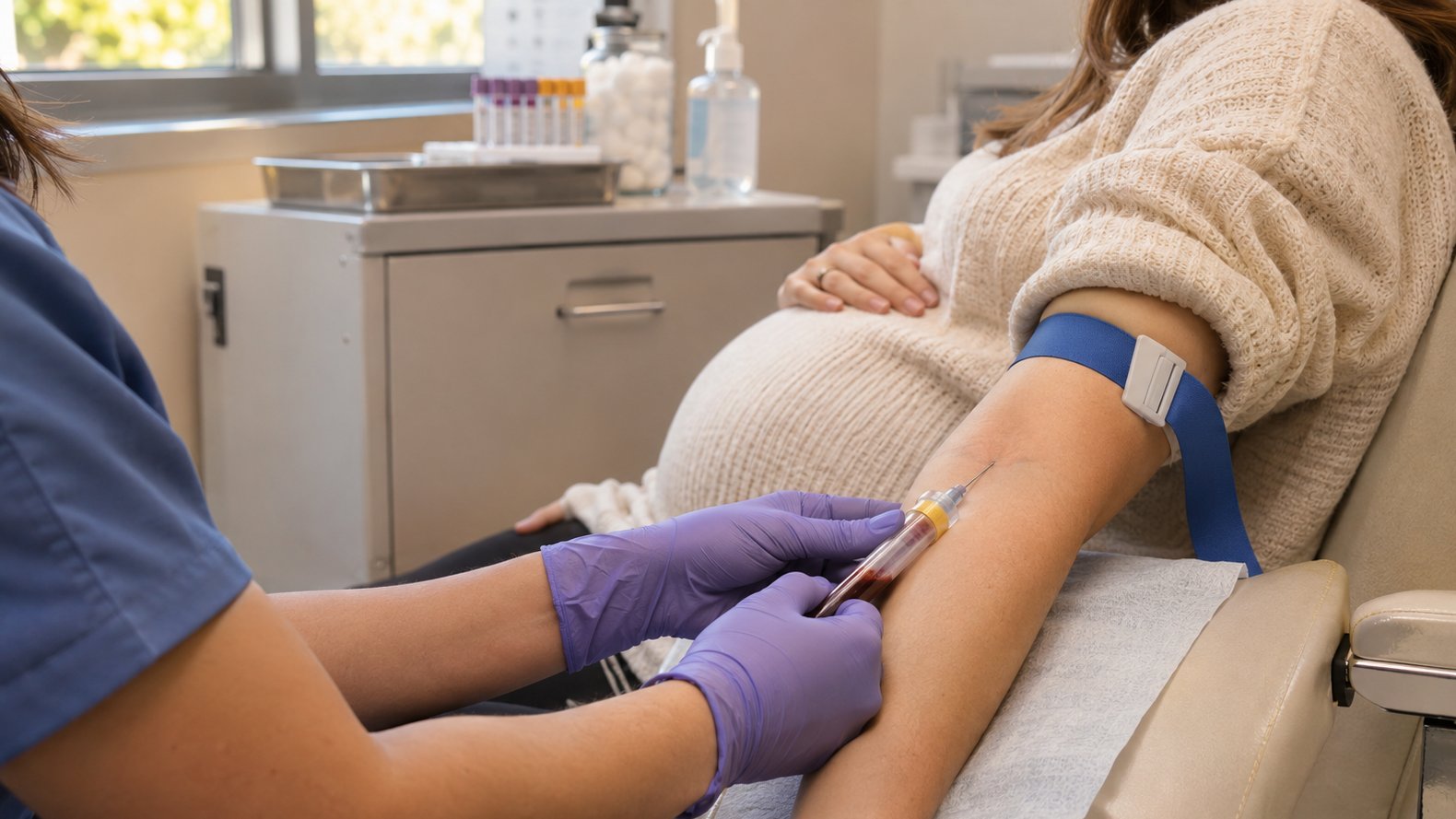
From that one-in-10 gap, the authors projected about 360,000 newborns a year born without a recorded maternal test. They estimated that more than 640 infants a year are born to mothers whose infection goes undetected. Both projections assume untested mothers carry the virus at the same rate as tested ones.
When no result is on file, the mother should be tested as soon as possible after admission. If that result is positive, the baby gets hepatitis B immune globulin (HBIG) as soon as possible, and no later than 7 days of age. How quickly the hospital returns that test is a fair thing to ask before delivery.
The size of the drop, by year and by the mother's test result
Coverage here means a dose within one day of birth. It peaked at 80.6% in 2020. From 77.9% in 2023 it fell every year, to 65.6% in the first half of 2026. The decline began nearly three years before federal advisers changed the recommendation.
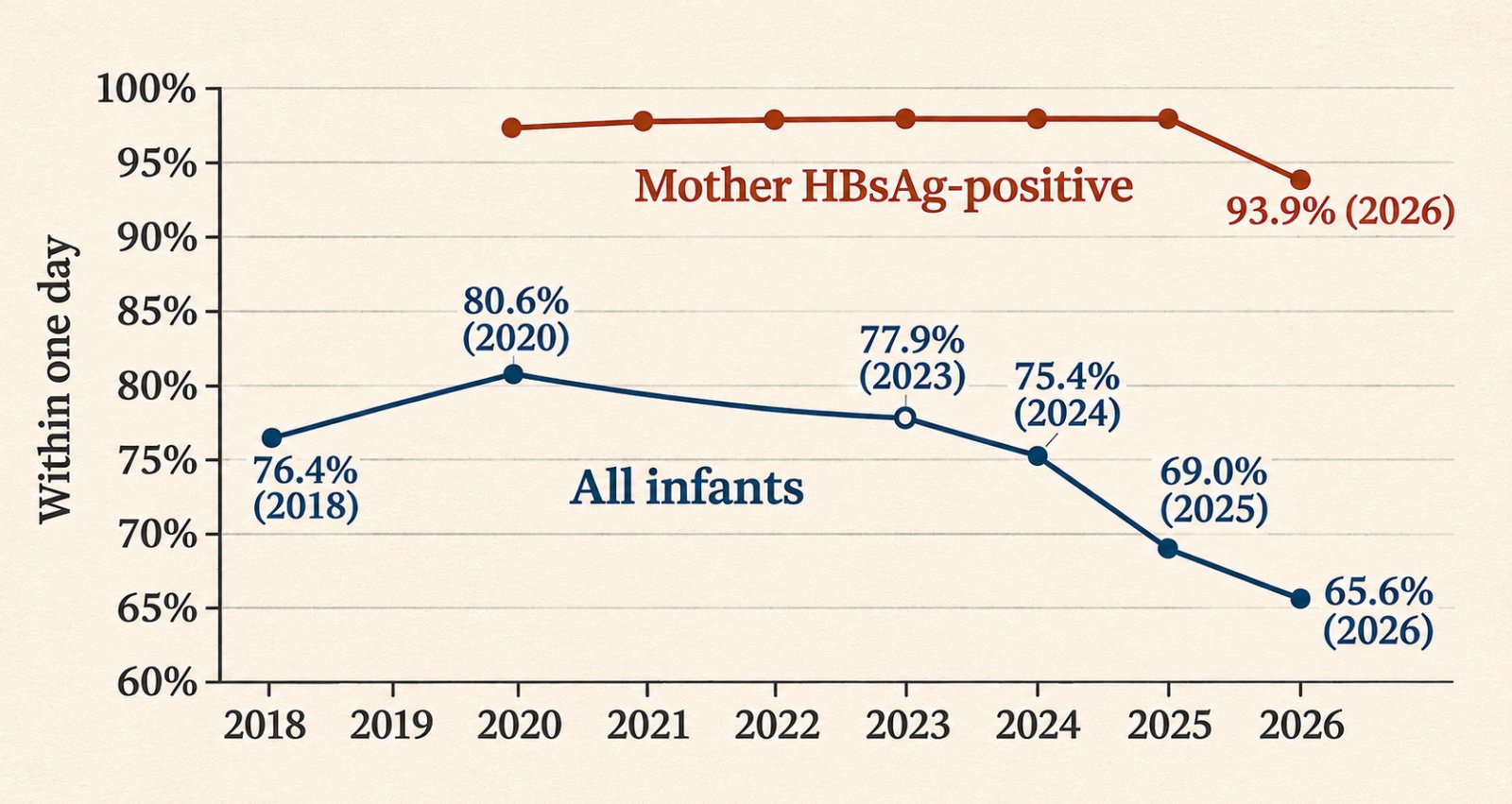
The mother's HBsAg result splits the count further. Babies of negative mothers got the dose 75.9% of the time. With no documented test, it was 75.4%. Babies of positive mothers got it 96.9% of the time.
Unknown status is one of the cases the CDC wants covered within 12 hours. Those babies were vaccinated at 76.8%, about the same rate as babies of negative mothers. A record within one day of birth does not show whether that window was met.
Coverage for babies of positive mothers stayed far above the all-infants line from 2020 on. From 2020 to 2025, 97% to 98% of them got the vaccine at birth. In January to June 2026 that fell to 93.9%.
The records cannot say why a dose was missed. Nor can they show whether more babies were infected as a result.
Birth dose or a first dose at 2 months
On Dec 16, 2025, the CDC adopted its advisers' recommendation on the birth dose. It allowed babies of negative mothers to get the first dose at birth or later, through shared clinical decision-making. A series put off that way was to begin no earlier than 2 months of age. Babies of positive or unknown-status mothers were still to get a dose within 12 hours.
In March 2026, a federal judge temporarily blocked those decisions. The stay also covered the advisers' votes, the birth-dose change among them. The order is temporary, and it restored the previous recommendations while litigation continued.
The final dose in any series should not come before 24 weeks of age, which is 164 days. For babies born to HBsAg-positive mothers, the CDC calls for a blood test at 9 to 12 months of age, or one to two months after the series is completed if the series was delayed. That test checks whether the baby made protective antibodies.
The vaccine alone is about 75% effective at preventing transmission around birth in babies of HBsAg-positive mothers. Given with HBIG, it is about 94% effective. About 98% of healthy babies born at term reach protective antibody levels.
The 400-study review, which covered about 40 years of research, looked at the delay itself. It found no evidence that delaying the birth dose improves safety or effectiveness. It also found no serious short- or long-term adverse events or deaths from the birth dose. Short-term reactions, such as low-grade fever or local redness, were mild to moderate. The CDC lists injection-site reactions and mild systemic reactions as the most common adverse events after hepatitis B vaccination. People who are moderately or severely ill should wait until they recover before getting a hepatitis B vaccine, but giving it to someone with a minor illness, such as a cold, is fine. As a precaution, doctors should check for any earlier allergic reaction to a previous dose of hepatitis B vaccine, any part of the hepatitis B vaccine, or yeast.
Parents weighing a delay can ask the pediatrician for the date the first dose would be given. Where the mother tested positive, they can also ask when the follow-up blood test is planned. For a baby under 2,000 grams whose mother tested negative, ask whether the dose comes at discharge or at 1 month. Where the mother is positive or her status is unknown, the 12-hour rule applies. And ask the hospital which schedule it follows.

Sherif Nassar
I write about sleep, exercise and diet claims, and the numbers behind them.
View profileRecommended for you
More stories →
Most adults need no measles booster, but birth year and records decide who does
The New Pancreatic Cancer Pill's 90% Figure Measures Disease Control in 61 Patients
Stopping statins in people 70 and older raised events to 12.7% from 9.2% in STREAM
Leave a Comment