$100,000 at 4% for 20 Years Ends Near $179,000 With a 1% Fee
In the SEC's example, $100,000 at 4% for 20 years ends near $179,000 with a 1% fee and about $208,000 at 0.25%. When a 1.2% IRA advisory fee is worth paying, Vanguard's 0.30% tier, and moving an IRA by direct transfer.
views
$100,000 earning 4% a year for 20 years ends at about $179,000 when 1% a year goes to fees, in a worked example from the SEC.
At a 0.25% fee, the same money ends at about $208,000.
What a yearly percentage fee costs over 20 years
The fee is quoted per year, which makes it look small.
It is charged on the whole balance, gains included, so it compounds the same way the money does.
The SEC's investor bulletin on fees gives the full run for that $100,000 portfolio at 4% a year for 20 years:
- 1.00% a year: about $179,000
- 0.50% a year: about $198,000
- 0.25% a year: about $208,000
These are an illustration, not a forecast: the 4% return is an input, and a different return moves every line.
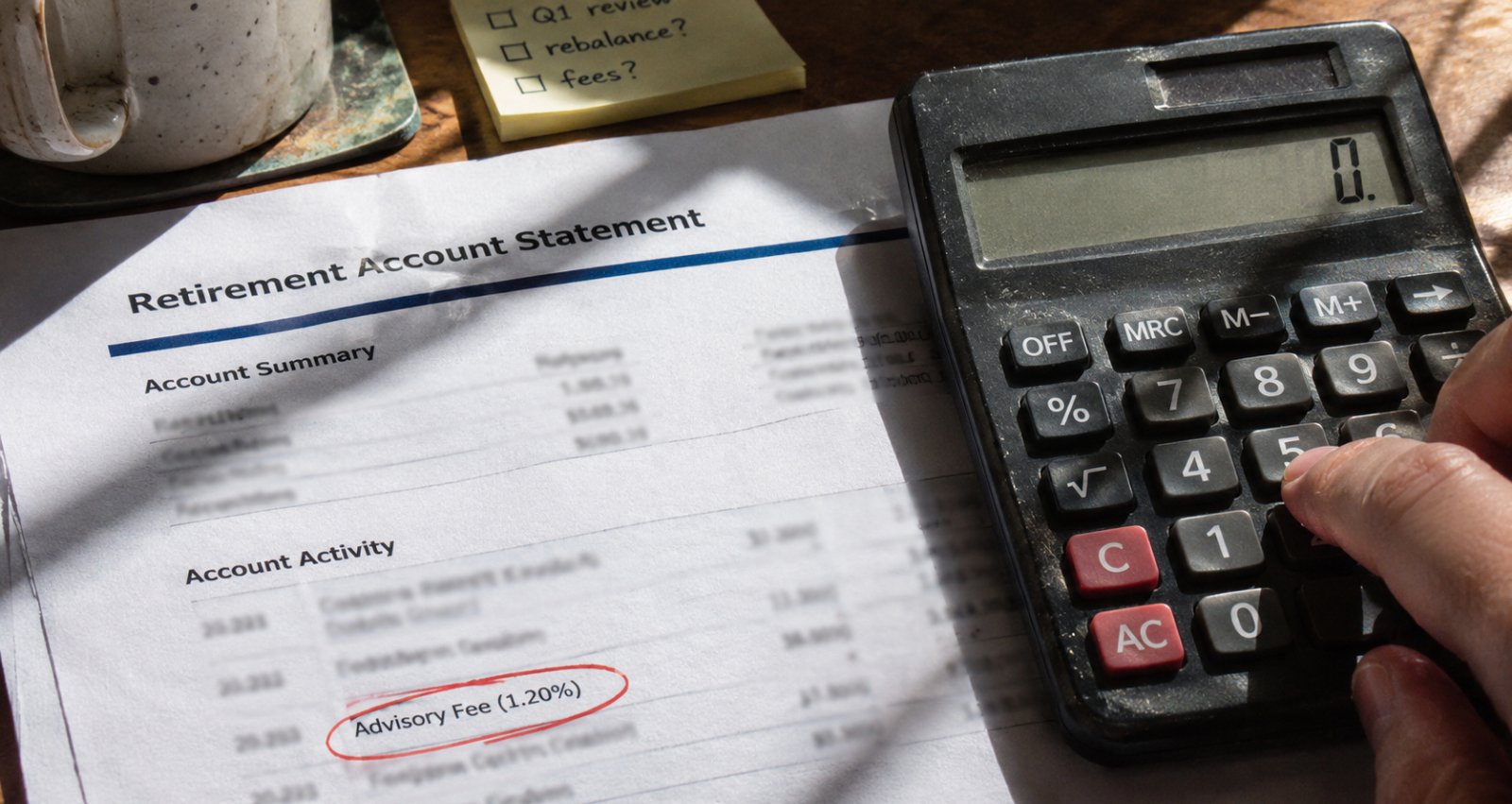
A 1.2% advisory fee sits above the top of that list, so the same money ends lower still.
Money added every year is charged the same way once it lands in the account.
For an adviser who only picks and holds funds, 1.2% is too much.
An adviser quoted in Kiplinger says the same about a smaller fee: "If you're paying 1% for investment management only, then you're overpaying for sure."
In that adviser's view, 1% earns its keep only when it pays for more than investment management.
It is worth paying only when the adviser changes what you actually do with the money.
What the fee can buy, and what it cannot
Vanguard, which sells advice itself, has estimated that an adviser can add about 3 percentage points of measurable gain to a client's portfolio, and splits that into parts:
- behavior coaching: about 150 basis points a year
- tax management: 100-140 basis points
- keeping costs low: 50 basis points
- rebalancing: about 40 basis points
The parts add up to more than the 3-point total, and Vanguard does not present the gain as something that turns up every year.
Rebalancing is the weakest reason to pay 1.2%.
A target-date or balanced index fund rebalances inside the fund, and a single stock-index fund has nothing to rebalance.
What 1.2% can buy, when the adviser does the work:
- rebalancing back to an agreed mix of stocks and bonds
- tax work across accounts: which account holds what, and which one to draw from first
- someone to call before selling in a falling market
- a written plan for retirement income and spending
What it does not buy:
- a higher return on the same holdings, because every point of fee is a point less return, every year
- a pause in the fee in bad years: the percentage is still charged on whatever the balance is, up or down
Advice does not have to cost 1.2%.
Vanguard's Personal Advisor charges about 0.30% a year, or $30 for every $10,000, with a $50,000 minimum, taken quarterly and not counting the cost of the funds underneath.
Personal Advisor cannot manage accounts held at other firms, so choosing it means moving the IRA first.
When 1.2% is worth paying
If the adviser's job is keeping you invested through a market fall, and keeping contributions going when the news turns bad, the fee pays for the service Vanguard puts the highest value on.
If your money sits in several types of account, the fee can also pay for planning which account to draw from first, and when.
On a $250,000 traditional IRA, a 1.2% fee comes to $3,000 a year.
That fee can be taken out of the IRA or paid with money from outside it, and which way costs less after tax depends on the person's situation, so settle the billing method with the adviser before signing.
Ask the adviser to put in writing what the fee covers beyond the portfolio. If the answer is short, compare it with a one-fund IRA or an advice tier near 0.30%, such as Vanguard's Personal Advisor with its $50,000 minimum. Which of these suits depends on how much help the person needs.
Moving an IRA without a tax bill
To leave, do it in this order:
- Open the new IRA at the firm you are moving to. Opening it first is the usual practice, because the transfer needs an account to arrive in.
- Ask the new firm to request a direct trustee-to-trustee transfer from the old one.
- Do not take a check made out to you at any point.

The IRS rollover rules do not count a direct trustee-to-trustee transfer as a rollover, so the once-a-year limit does not apply to it, and they state: "No taxes will be withheld from your transfer amount."
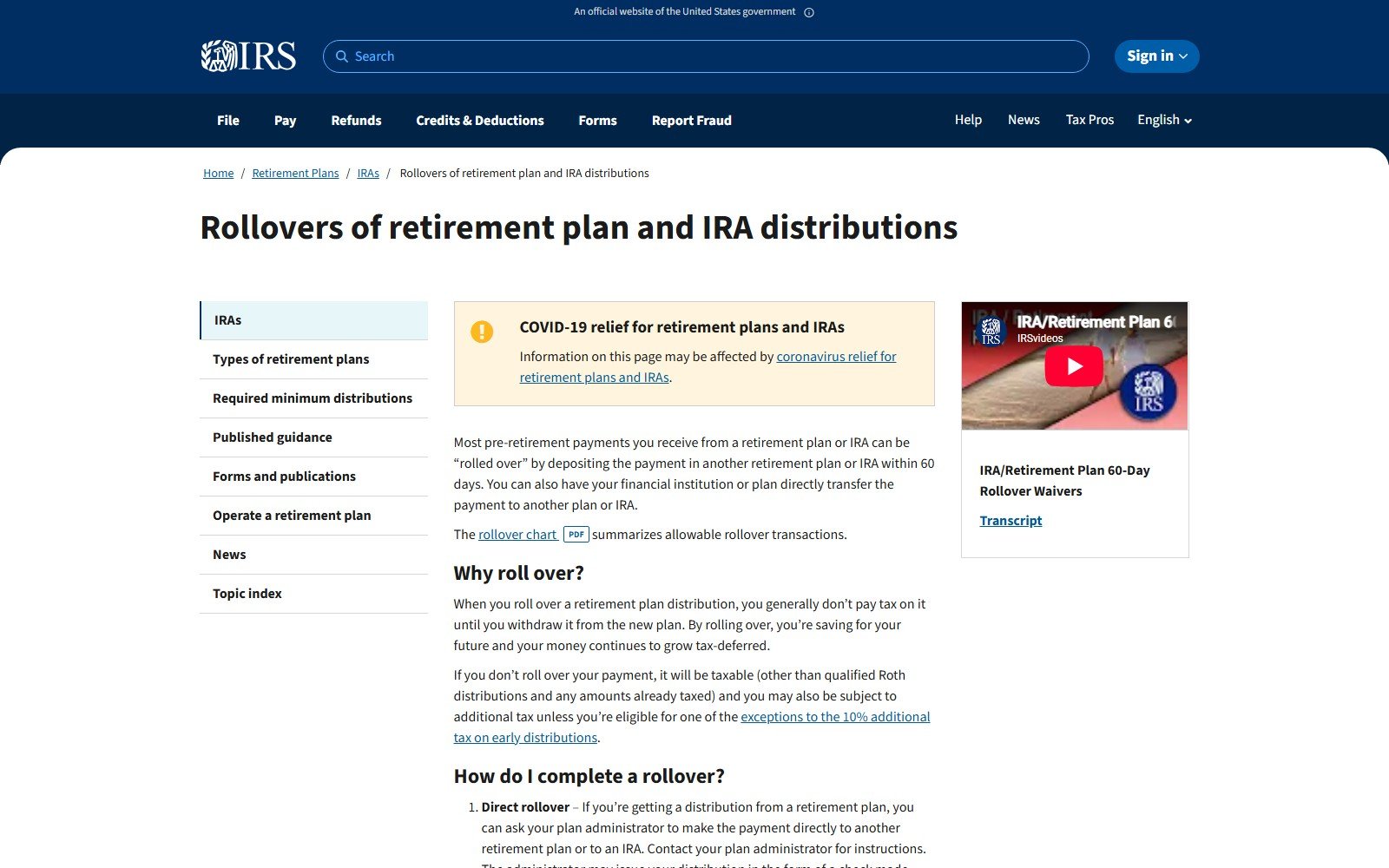
A check made out to you works differently. When an IRA pays money out to you, 10% is withheld unless you elect out of withholding, and you then have 60 days to get the money into the new IRA. With 10% held back, putting the full amount into the new IRA means covering that 10% from other money.
The IRS can waive the 60-day deadline for circumstances beyond your control.
That paid-out-and-put-back move is what counts as a rollover. You generally cannot make more than one from the same IRA within a year, and since 2015 the limit has covered all of a person's IRAs together: traditional, Roth, SEP and SIMPLE.
Keep the account types matched: traditional into traditional, Roth into Roth. Moving traditional money into a Roth is a conversion, conversions are taxed, and that decision is separate from choosing who manages the account.

Faizal Mokhtar
Earnings season is Faizal Mokhtar's busiest time, and he reads the reports closely. He also writes about markets and bank apps. Another regular topic is what jobs really pay, compared with the ads.
View profileMore from Faizal Mokhtar
View all →

Recommended for you
More stories →
S&P Weighs an Nvidia Credit Rating Downgrade From AA to AA-
Gold's 1980 Peak Took Nearly 28 Years to Pass, and 45 After Inflation

A spouse's general-purpose FSA can block your HSA contributions, and old ones can be fixed

Leave a Comment