Hedge funds are selling AI stocks. Should your index fund care?
Morgan Stanley and Goldman data show hedge funds cutting AI exposure, mostly by trimming risk. Copying them through 13F filings is hard: filings arrive up to 45 days after quarter end and leave out shorts. An S&P 500 fund held Nvidia at 8.39% on Sept 30.
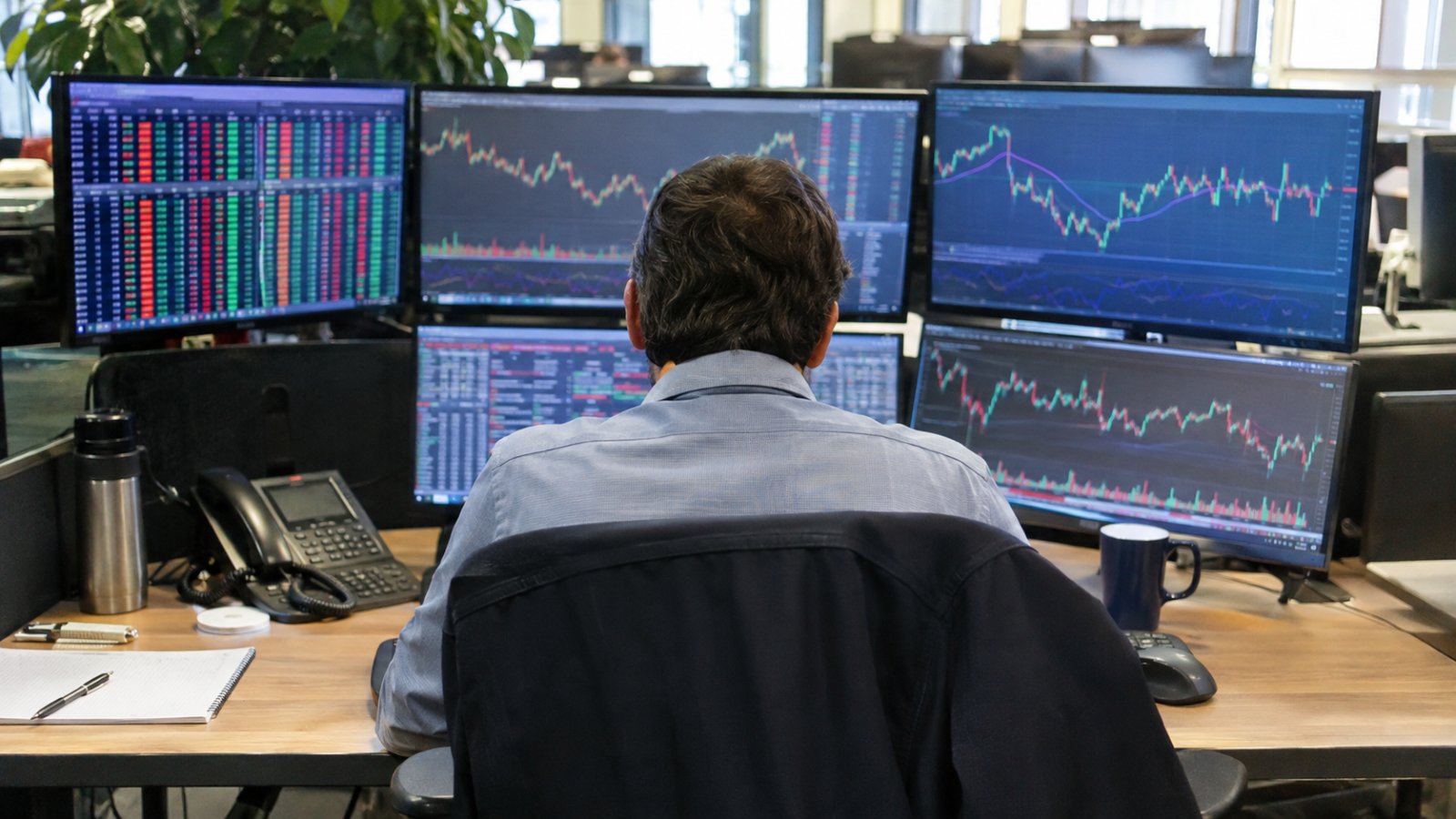
views
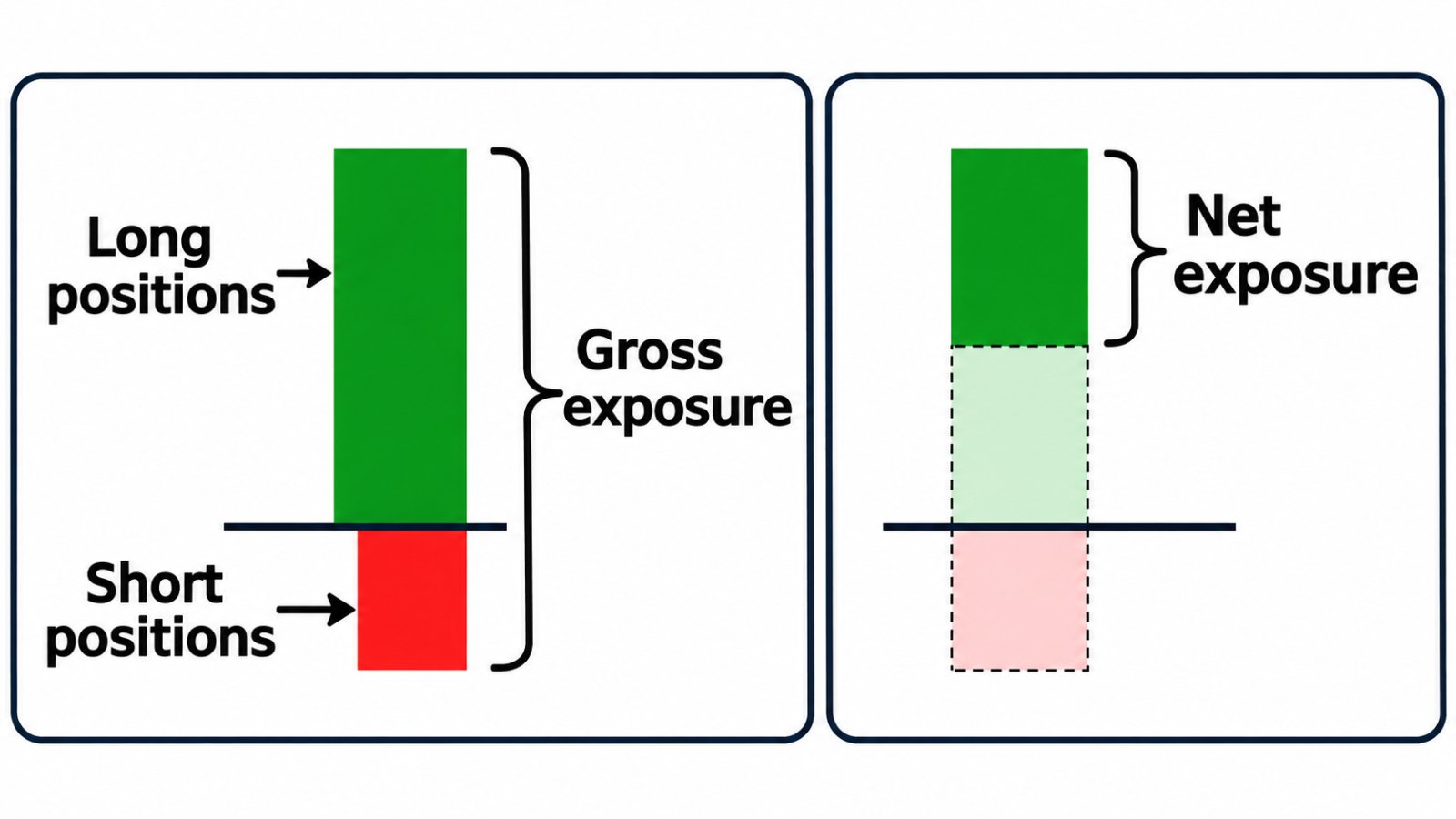
Gross leverage on Morgan Stanley's prime brokerage books fell to 207%. That gross figure counts bets in both directions: shares the funds own plus shares they have sold short. The net figure subtracts the bets against stocks from the bets on them. For US long-short funds it rose five points to 51%, mostly because funds closed out short positions. The 51% covers that narrower group of funds, and the 207% is reported for Morgan Stanley's prime book without the US long-short label. Read side by side, the two numbers point to smaller books and fewer bets against stocks.
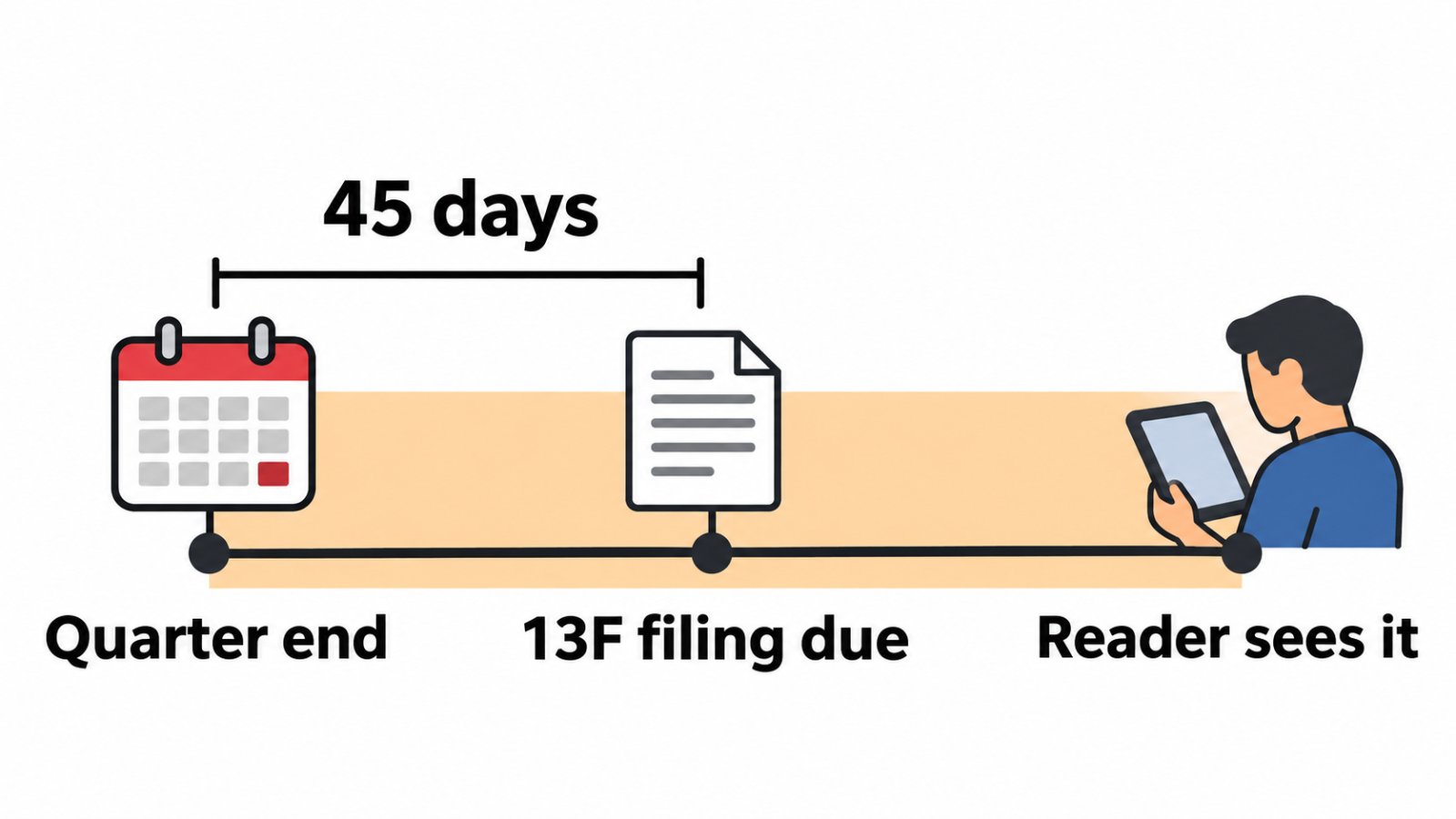
Those figures sit under this month's headline that hedge funds have turned against AI stocks. If you hold an index fund, the practical question is whether to follow them, and the sources show why that is hard to do. Form 13F, the public record of what a hedge fund owns, is due up to 45 days after each quarter ends and leaves out short positions. Research on whether hedge funds' best ideas beat the rest of their portfolios is split. Meanwhile, as of September 30, an S&P 500 fund held Nvidia at 8.39%.
What does "turned against AI" mean in the data?
Mostly a cut in risk, as Hedgeweek reads it, and not a full retreat. The headline itself comes from Morgan Stanley's prime brokerage data, reported by Yahoo Finance on November 3: hedge funds are underweight the broader artificial-intelligence trade for the first time since early 2023. The reporting does not say what benchmark that underweight is measured against.
Goldman Sachs' prime book shows the selling from another angle. In five sessions, hedge funds there erased every net purchase of global AI stocks made since the start of 2025, Hedgeweek reports, and long selling ran 3.5 times ahead of new short selling. Selling shares a fund already owns reduces its exposure. A new short is a bet that the price will fall. Hedgeweek calls the move a "reduction in risk appetite rather than a complete retreat from AI-related investments," driven by concern over valuations and whether AI investment can be sustained.
Overall hedge fund exposure fell about 7.8% in Morgan Stanley's figures, the largest reduction since that series began in 2016, according to Hedgeweek's account of the data. On October 22, Goldman's basket of hedge fund favourites dropped 4.2%, its steepest one-day fall since 2011. Tech makes up 23.5% of Goldman's global prime book, by the same report.
Prices and positions run on different dates. Since October 6, 47 AI and chip stocks have lost about $5 trillion in value, Yahoo Finance reports. In a separate measure, the same article puts the cut in funds' total stock exposure at more than 8% since June. It does not say whether that figure comes from the same Morgan Stanley series as the 7.8% cut.
Why one bank says underweight and another says 83rd percentile
The reporting doesn't explain the gap. Morgan Stanley's data has hedge funds underweight AI. Goldman's prime book, as summarised by TradingView, still puts long-term hedge fund positioning in global AI at the 83rd percentile of the past three years, even though funds reversed all of their net AI buying since 2025.
The unwind is "closer to its start than its end."
Goldman Sachs, as reported by Yahoo Finance
From Morgan Stanley's prime desk comes the counterweight. Low net exposure, the desk says, leaves "room for more short covering in an eventual market turnaround," Yahoo Finance reports. Short covering means buying back shares that were sold short.
Can you copy a hedge fund?
Not easily. The public filings are late and blind to shorts. Prime-broker data is aggregated across each bank's clients, so it doesn't show what any one fund holds. That record is Form 13F. Under the SEC's Form 13F rules, a manager with investment discretion over $100 million or more in 13(f) securities must file, and each filing is due within 45 days after the end of the calendar quarter.
Filings for the quarter that ended on September 30 show holdings as of that date, before the October 6 start of the slide Yahoo Finance describes. They do not come before all the selling, since Yahoo Finance dates the cut in funds' stock exposure from June.
Shorts are the second gap. The SEC's FAQ says it plainly: "You should not include short positions on Form 13F." Most of the rise in the US long-short net figure came from unwinding shorts, according to Morgan Stanley's data, and none of that appears in a 13F. Managers below the $100 million threshold don't file at all.
Even complete, current holdings would leave the research split. A 13F study by Epsilon and Papanicolaou of about 1,500 hedge funds from 1999 to 2018 found that funds' best ideas did not outperform the rest of their portfolios. No link to that study was available at the time of writing. A paper by Antón, Cohen and Polk found the opposite: best ideas "generate statistically and economically significant risk-adjusted returns over time." Both are working papers.
Did shifts like this come before a fall?
Unknown. No published hit rate for this signal was available at the time of writing.
The one related finding on record is about crowding. In selloffs such as the first quarter of 2016, Cambridge Associates found that crowded hedge fund longs "exhibit higher beta to the downside than non-crowded positions." Beta measures how much a holding moves with the market, so the crowded stocks fell further than less crowded ones when markets dropped.
How much AI does an index fund already hold?
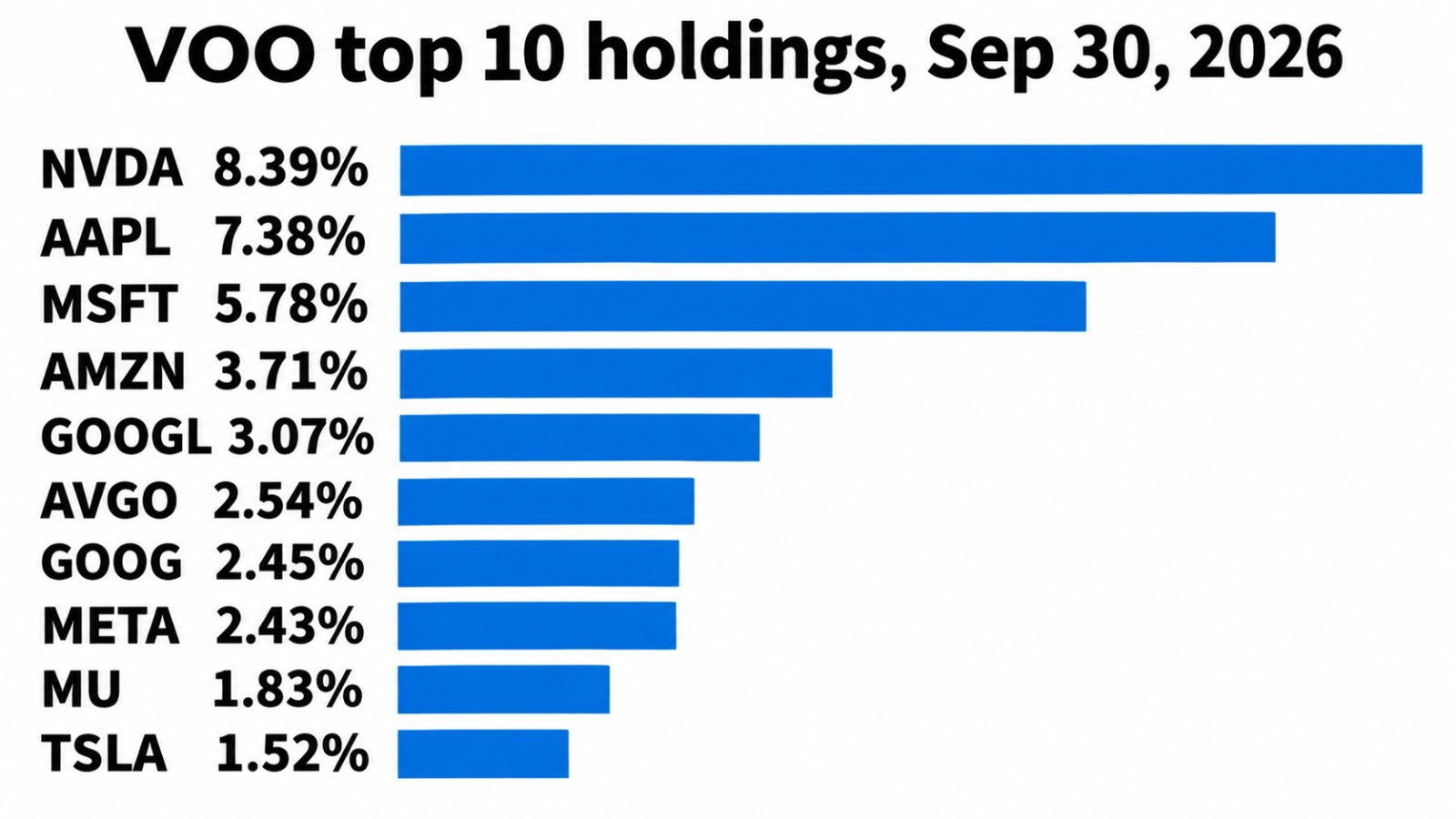
As of September 30, Nvidia was the largest single holding in Vanguard's S&P 500 ETF, at 8.39%. Index funds of this kind hold companies in proportion to market value, so the biggest names in the AI selloff sit at the top. On that date Vanguard's S&P 500 ETF (VOO) held Nvidia at 8.39%, Apple 7.38%, Microsoft 5.78% and Amazon 3.71%, with Alphabet's two share classes at 3.07% and 2.45%, Broadcom 2.54%, Meta 2.43%, Micron 1.83% and Tesla 1.52%. Those ten made up 39.11% of the fund.
The broadest count depends on the definition. JPMorgan's basket of 41 AI companies made up 49% of the S&P 500's market value in early October, Crypto Briefing reports. That figure depends on which companies the bank counts as AI.
| Fund or index | What is counted | Weight | As of | Source |
|---|---|---|---|---|
| Vanguard S&P 500 ETF (VOO) | Nvidia alone | 8.39% | Sep 30, 2026 | StockAnalysis |
| Vanguard S&P 500 ETF (VOO) | Top ten holdings combined | 39.11% | Sep 30, 2026 | StockAnalysis |
| Vanguard Total Stock Market (VTSAX) | Top ten holdings combined (led by Nvidia, Apple, Alphabet and Microsoft) | 33.4% of net assets | Jun 30, 2026 | Vanguard factsheet, via StockAnalysis |
| S&P 500 | JPMorgan's 41-company AI basket (depends on which companies count as AI) | 49% of market value | Early Oct 2026 | JPMorgan, via Crypto Briefing |
The rows come from different dates and use different definitions, so they show a range, not one series. A fund's own fact sheet lists its largest holdings with their weights and an "as of" date, so the same view can be built for any fund.
Does the selling change what an index fund holds?
Through prices, which have already moved. An index fund holds the 47 AI and chip stocks in Yahoo Finance's count by market value, so the roughly $5 trillion those stocks have lost since October 6 is already in index funds' holdings. The 8.39% Nvidia weight is a September 30 figure, taken before that slide began.
One set of dates is fixed by rule. Under the SEC's 45-day rule, the next 13F filings cover the quarter that ended September 30, and the ones after that cover the December quarter. Nvidia's next earnings date was not available at the time of writing. Hedge funds are paid to decide how much Nvidia to own. An S&P 500 fund held 8.39% of its assets in Nvidia as of September 30 because that was Nvidia's share of the index, and it needed no prime-book report to get there.
Sources: Morgan Stanley prime brokerage data and Goldman Sachs comments via Yahoo Finance; Goldman Sachs prime book via Hedgeweek and TradingView; SEC Form 13F FAQ; StockAnalysis (VOO holdings, Vanguard VTSAX factsheet); JPMorgan via Crypto Briefing; Cambridge Associates; Antón, Cohen and Polk (LSE); Epsilon and Papanicolaou.

Tomasz Kowalczyk
Tomasz Kowalczyk writes the home and family guides. Father of two, near Krakow.
View profileMore from Tomasz Kowalczyk
View all →


Recommended for you
More stories →
Where First-Time Buyers Paying All Cash Get the Money, and How to Bid Against Them
HDHP and HSA vs. No-Deductible Plan: The Break-Even Math for 2027 Enrollment
Eight Ways Out of a Concentrated Stock Position, and What Each Costs in Tax
Leave a Comment