2026 QQ8 Is About a Metre Wide. Two Myths About Earth's Mini-Moon, Checked
2026 QQ8 is about 1 to 2 metres across, and EarthSky and Gizmodo call it a mini-moon. This explainer checks two myths against the sources, sets out the conflicting closest-approach figures, and lists the published capture, departure and return dates.
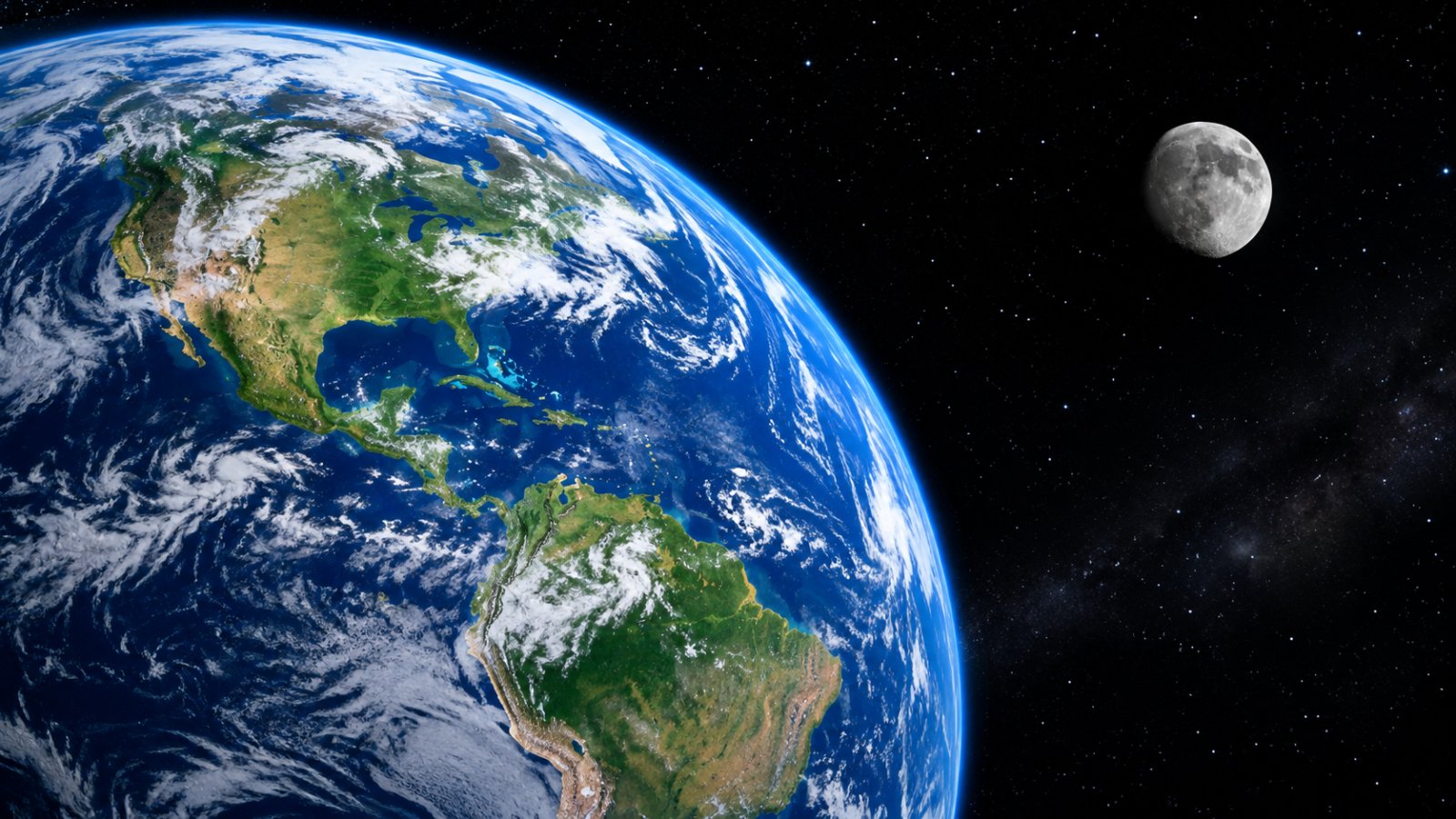
views
About 1 metre. EarthSky and Gizmodo give that width for 2026 QQ8, and Sky at Night Magazine puts it at 1 to 2 metres. Both EarthSky and Gizmodo call it a mini-moon. The Moon, according to NASA, has a radius of about 1,740 km.
Two claims need checking against those numbers. The first is that Earth now has a second moon. The second is that you can go out and see it. The sources support a narrow version of the first claim. None of them supports the second.
The Moon against 2026 QQ8, row by row
| The Moon | 2026 QQ8 | |
|---|---|---|
| Size | Radius about 1,740 km (NASA), so about 3,480 km across | About 1 m (EarthSky, Gizmodo); 1 to 2 m (Sky at Night) |
| Distance from Earth | Average 384,400 km, or 238,855 miles (NASA) | Closest approach: 0.0038 AU (EarthSky), about 568,000 km (Starlust); 1,351,914 km on 13 December 2026 (TheSkyLive). Only TheSkyLive gives a date, and the figures conflict, as covered below. |
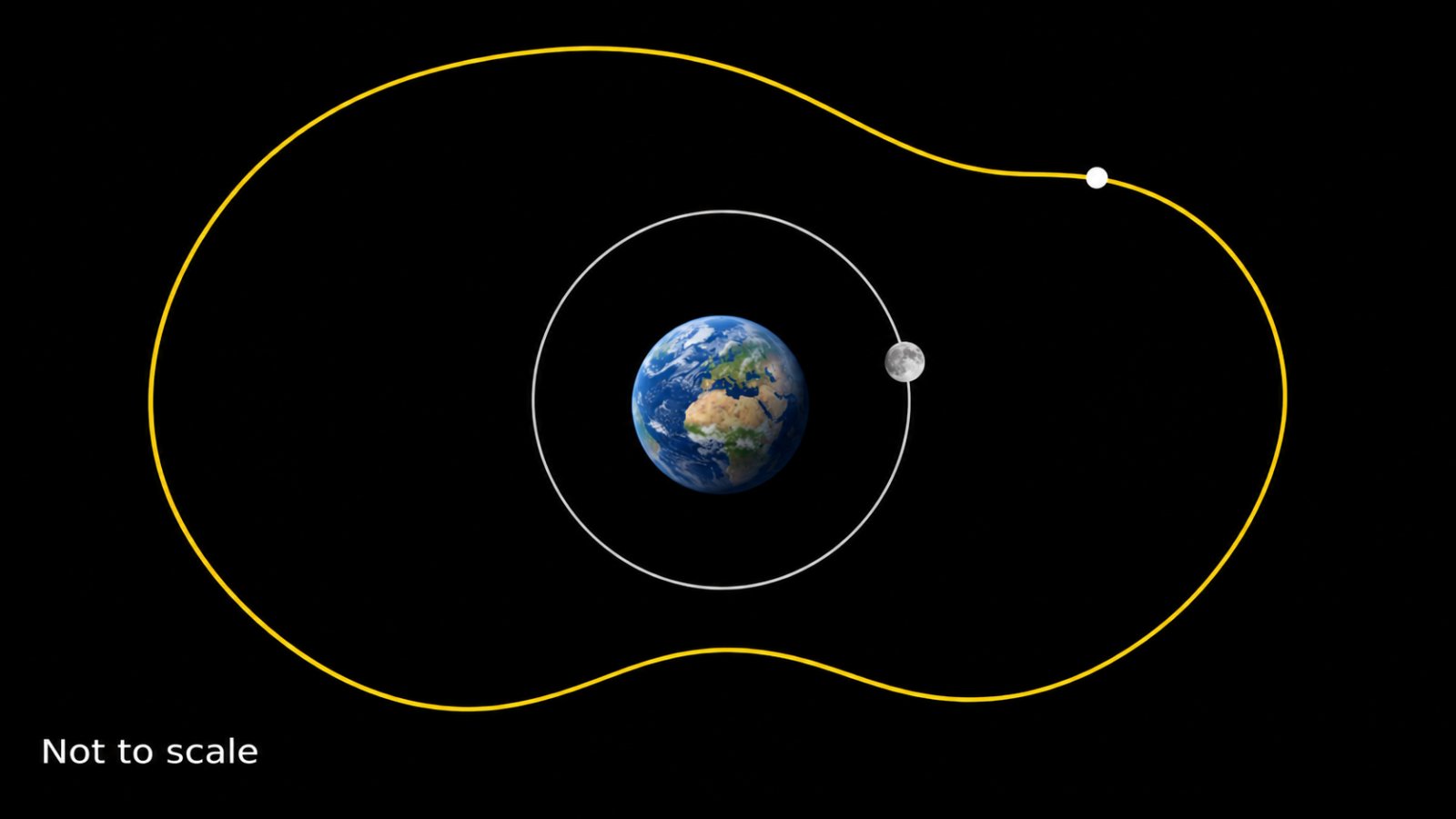
| Orbit | One full orbit of Earth in 27 days (NASA) | A wide, kidney-shaped loop around Earth (Gizmodo); about 359 days to orbit the Sun, slightly less than Earth's 365 days (Starlust) |
| Visibility | Visible to the naked eye | Not visible in amateur telescopes (Sky at Night); no source addresses binoculars or the naked eye |
| How long it stays | Permanent companion | Captured late April 2026 (EarthSky); leaves in December (Gizmodo), December or possibly January (Sky at Night), or 2027 (Starlust, EarthSky) |
Myth one: Earth has a second moon
What the sources say: the capture is on record. Xenospectrum reports that the Minor Planet Center's circular MPEC 2026-U95, issued October 29, says orbital integration shows the object to be "temporarily bound to Earth by gravity." The MPEC itself was not available at the time of writing. That wording is the nearest thing to a definition of a temporarily captured object in the coverage. It describes an object held by Earth's gravity, but only for a time. None of the sources cited here gives a formal definition of what makes something a moon.
EarthSky treats a quasi-moon as a separate category: "A quasi-moon is not truly orbiting Earth." The MPC wording, as Xenospectrum reports it, places 2026 QQ8 outside that category. It is bound to Earth, for now.
Then there's size. NASA gives the Moon a radius of about 1,740 km, which makes it about 3,480 km across, and NASA notes that even at that size the Moon is less than a third of the width of Earth. 2026 QQ8 is about 1 metre across by EarthSky's and Gizmodo's figure. Sky at Night gives 1 to 2 metres, and the same article also says about a metre. One object is measured in thousands of kilometres. The other is measured in metres.
My view: "mini-moon", the label EarthSky and Gizmodo use, is the fair one. The MPC wording supports the "moon" half. The size supports the "mini" half.
Myth two: you can go out and spot it
"2026 QQ8 is not visible in amateur telescopes." (Sky at Night Magazine)
That is the only statement on visibility among the sources cited here. None of them covers binoculars or the naked eye, and none gives a brightness figure for 2026 QQ8. How far it sits below amateur reach is unknown.
For a sense of what the Moon does on the same scale, asterism.org lists the full Moon's average apparent magnitude as -12.7. With no magnitude published for 2026 QQ8, the two cannot be set side by side.
The closest-approach figures don't agree
EarthSky gives the closest approach as 0.0038 astronomical units. Starlust gives about 568,000 km (353,000 miles). TheSkyLive's tracker lists a closest approach on 13 December 2026 at 0.009037 AU, or 1,351,914 km. The TheSkyLive page was not available at the time of writing, and its figure is taken from search-result text.
Put the published numbers next to each other and the conflict is plain. In astronomical units, TheSkyLive's 0.009037 is larger than EarthSky's 0.0038. In kilometres, TheSkyLive's 1,351,914 is larger than Starlust's 568,000. Both of those kilometre figures are larger than NASA's 384,400 km average distance to the Moon, so on either one the closest pass falls beyond the Moon's average distance. None of the sources explains the gap, and which figure is right is unknown.
My read: until a source reconciles them, the closest-approach distance is an open number, and any single figure quoted as settled is picking a side.
Natural rock, composition unknown
Xenospectrum reports that 2026 QQ8 was judged natural from its orbit and its area-to-mass ratio, and that "no association with any known artificial object was found." The same report says no spectroscopy of its composition has been reported. What it is made of is unknown.
Xenospectrum also separates two dates. October 29 is when the circular was issued, "not the date Earth's capture began." EarthSky puts the capture in late April.
It leaves in December or later, and the sources don't say how
Gizmodo says it stays until December. Sky at Night says December or possibly January. Starlust and EarthSky both say 2027. The sources put departure in December or later.
How the capture ends is a separate question, and none of the sources cited here answers it.
On return visits, Sky at Night says the kidney-shaped orbit brings 2026 QQ8 relatively close to Earth about once every 10 years, and that it won't come this close again until 2058. Those figures cover this one object. None of the sources cited here gives a general rate for how often Earth captures mini-moons.
The dates on record
- Late April 2026: 2026 QQ8 becomes temporarily bound to Earth (EarthSky, Gizmodo).
- 20 August: Krisztián Sárneczky discovers it (Gizmodo).
- October 29: The Minor Planet Center issues MPEC 2026-U95, saying the object is temporarily bound to Earth (as reported by Xenospectrum).
- 13 December 2026: Closest approach, according to TheSkyLive's tracker. No other source cited here gives a date.
- Departure: December (Gizmodo), December or possibly January (Sky at Night), 2027 (Starlust, EarthSky).
- 2058: Its next approach this close, according to Sky at Night.

Marcus Adeyemi
I build gaming PCs and test them until the fans give up. If a game stutters, I want to know why. Writing from Lagos.
View profile



Leave a Comment