SpaceX caught a Starship, but the hard part of reuse is still the heat shield
On Nov. 14, Ship 42 became the first Starship upper stage caught by the Starbase tower. Here is what was caught, how it compares with Falcon 9 and booster catches, and why tiles and refueling still stand between Starship and rapid reuse.
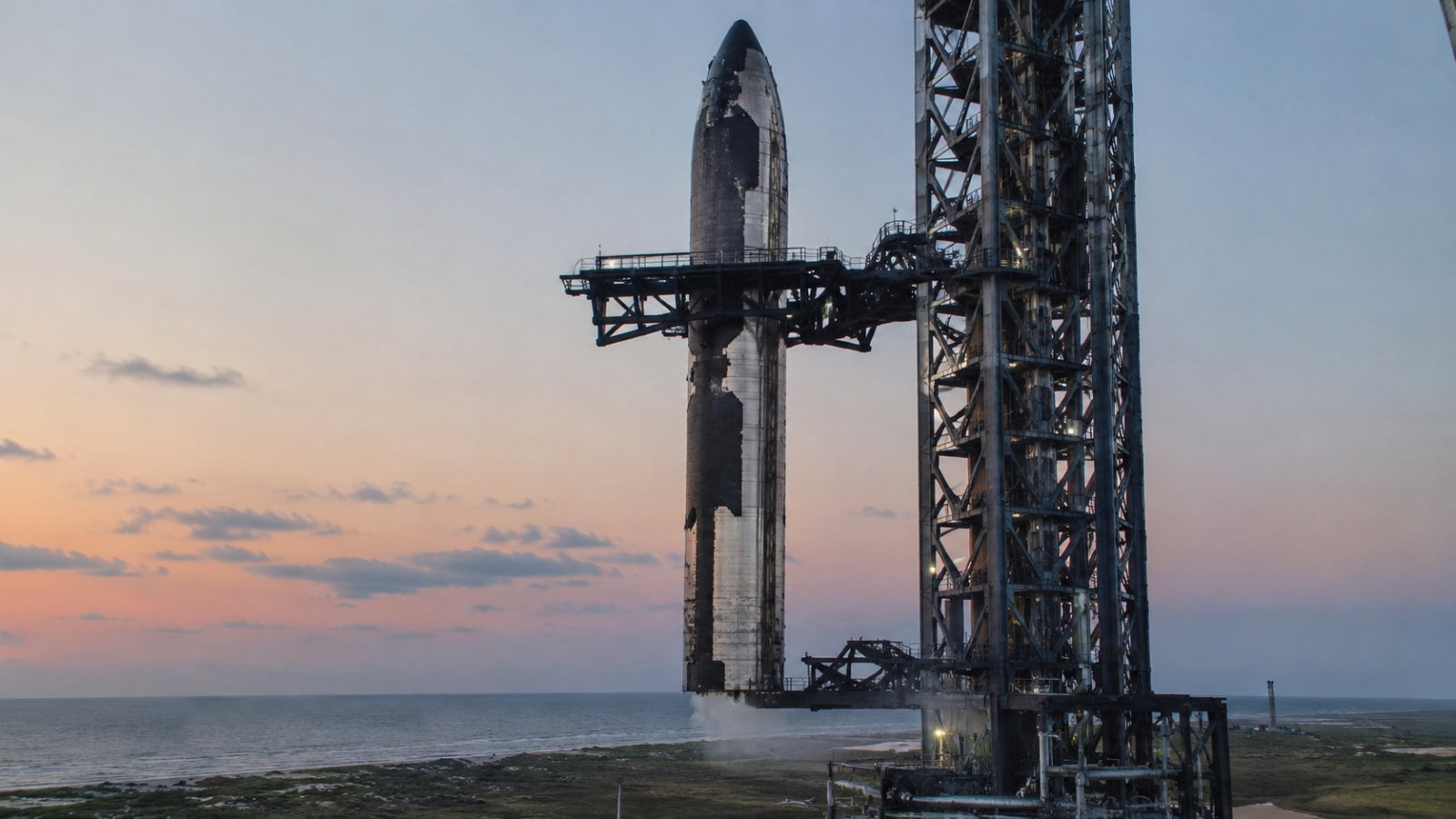
views
"That was the missing link." SpaceX commentator Dan Huot, on the Flight 15 broadcast
The missing link was the top half of the rocket.
On Nov. 14, 2026, the arms of SpaceX's Starbase launch tower caught Ship 42, the Starship upper stage, after 14 trips around Earth. Every tower catch before it had been a Super Heavy booster.
Ship 42 is the first upper stage the tower has caught, on a flight that lost its booster
Flight 15 began on Friday evening at Starbase. Ship 42 went around Earth 14 times over approximately 22 hours, and on the way back its velocity reached roughly 17,000 mph before atmospheric drag slowed it down, according to Interesting Engineering, which also carried Huot's "missing link" line from the broadcast.
The orbits were at an altitude of about 165 miles, per the AP report syndicated by Local 12.
Ship 42 also had work to do up there. It deployed 26 Starlink V3 satellites, and after the catch SpaceX posted on X: "Mechazilla catches Starship! Congratulations to the entire SpaceX team on this incredible achievement!" The post is quoted by Engadget. Mechazilla is the company's nickname for the tower.
The catch came roughly 22 hours after the Friday launch, Fox Business reports. NASA Administrator Jared Isaacman gave it a short verdict: "It was almost magic." The MarketWatch report on the catch was not available at the time of writing.
My take: fair praise for a first. Reuse gets judged on the repeats.
The booster had a worse day. Its engines shut down early and it "exploded before reaching the water," in the AP account. Musk said the loss won't delay the timetable, Ynet reports, and the next steps it lists are Raptor 3.2, software tweaks and "recovering both the booster and the spacecraft on the same flight." That has not happened yet: SpaceX has never recovered both stages on one mission, per Interesting Engineering.
Starship has no landing legs, so the tower has to catch it
A Falcon 9 first stage lands on its own legs, either on a landing pad or on a drone ship at sea that then carries it back to port. Super Heavy has no legs, so the tower catches it, and on Flight 15 the ship came home the same way for the first time. Shattered, a blog that covered the catch hardware, puts it in one line: "The ground equipment becomes the landing gear."
The payoff, as Interesting Engineering puts it, is that recovering both stages "could significantly reduce the time between Starship missions." My view: that time between missions is the figure to watch, and a catch is only the first step toward shrinking it.
The mechanics here come from a single blog source, Shattered. By its account, the two tower arms close on the ship's two catch fittings, which sit below the forward flaps, and they do it on a vehicle that has just come through reentry at the roughly 17,000 mph Interesting Engineering reports; Flight 15 used three engines for the return burn, and the final Raptor shut down after contact with the arms. Until this flight, the tower's arms had only ever held boosters.
The tower held three boosters before it held a ship
The tower has been catching boosters since 2024. The dates in this list come from Wikipedia's list of Starship launches; other details are credited in each line.
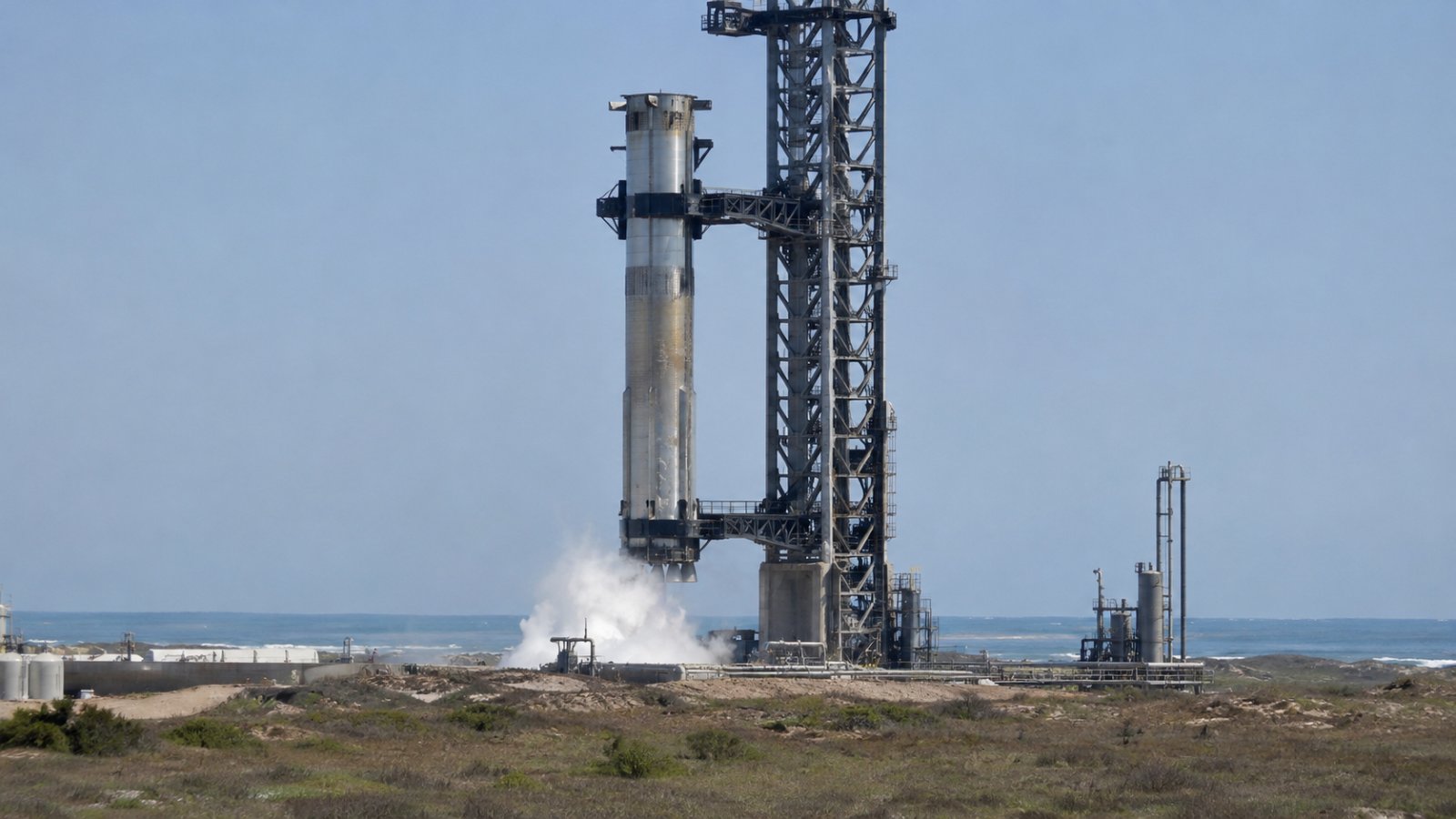
- Oct. 13, 2024, Flight 5: the first Super Heavy booster caught by the tower arms, at launch pad OLP-1.
- Flight 7: a second booster caught, also at OLP-1.
- Flight 8: a third booster caught at OLP-1.
- July 24, 2026, Flight 13: the ship comes home largely intact, and SpaceX gets "critical views of an intact heatshield for the first time," The Next Web reports. Musk says the next flight will try a ship catch, pending a data review.
- Sept. 28, 2026, Flight 14: Starship reaches orbit for the first time and deploys 26 V3 Starlink satellites over about 30 minutes with its "Pez dispenser" system, Payload reports. Musk estimated the chance of a first ship catch at 50 to 60 percent.
- Nov. 13, 2026 (UTC), Flight 15: Ship 42 is caught on Nov. 14 after 14 orbits, and the booster is lost.
The count of three earlier booster catches matches Fox Business, which says the booster had been caught "three times previously." After Flight 13, Musk said the next flight would try to catch the ship. The catch came on Flight 15.
What comes back today, and what has to come back fast
Rapid turnaround needs more than a caught ship. Here is where each part stands.
| Part | Reused or recovered today | Needed for rapid turnaround | Source |
|---|---|---|---|
| Super Heavy booster | Caught on Flights 5, 7 and 8; lost on Flight 15 after its engines shut down early | Caught on the same flight as the ship | Wikipedia, Fox Business, AP |
| Ship (upper stage) | Caught once: Ship 42 on Flight 15; both stages never recovered on one mission | Both stages recovered on one flight, listed as a next step | Interesting Engineering, Ynet |
| Heat shield | Seen intact for the first time after Flight 13; cracked tiles reported after that flight | Reuse with minimal refurbishment, without a tile-by-tile inspection | The Next Web, NatureWorldNews, Interesting Engineering |
| Engines (Raptor) | Three engines ran the ship's return burn; the booster's engines shut down early | Raptor 3.2 and software tweaks, listed as next steps | Shattered, AP, Ynet |
| Orbital refueling | Not demonstrated | Ship-to-ship transfer of methane and liquid oxygen; the demo takes two launches 3 to 4 weeks apart | Wikipedia |
What is still open: how long a caught ship or booster takes to fly again, what each reflight costs, whether the heat shield count is about 18,000 tiles or the 40,000 Musk mentioned, and how much propellant the tanker would move in the refueling demo, which Wikipedia calls "an unknown amount." Shattered's own caveat covers the first two: one catch "does not yet show how often it will work or how much each reflight will cost."
The tiles and the refuel are still unproven
I count the Flight 15 catch as a real first. I also think it leaves the harder problem for rapid reuse where it was: the heat shield.
Inspecting every tile by hand is too slow, by Musk's own account
Starship's heat shield is made of roughly 18,000 ceramic tiles, and tiles were found cracked after Flight 13, NatureWorldNews reports. On a podcast quoted in the same report, Musk said you "can't do this laborious inspection of 40,000 tiles" if you want to relaunch quickly. His figure is more than twice the report's, but his point holds at either number: a ship whose every tile is checked by hand does not turn around fast. The experts in that report put the real gap in the work after landing, the "extensive inspection and refurbishment."
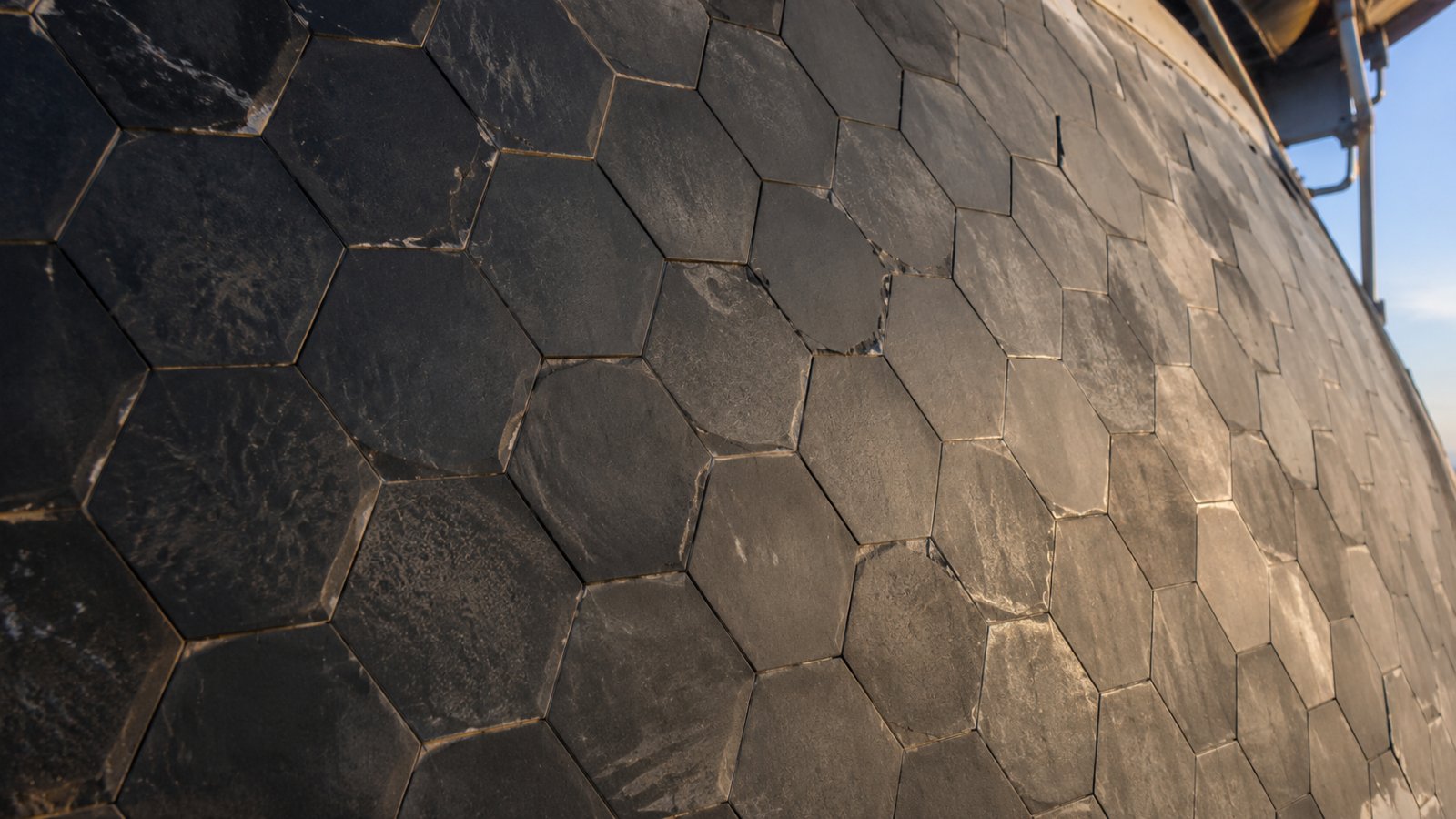
The heat shield "still requires further development before SpaceX can reuse it with minimal refurbishment," in Interesting Engineering's words. Both flights before this one produced pictures of it. Flight 13 gave SpaceX its first views of an intact shield, and on Flight 14 three of the Starlink satellites carried cameras to photograph it after deployment, Payload reports. My opinion: from here on, the tiles are the part of Starship I would watch on every flight, more than the arms.
The propellant transfer demo keeps slipping
The Starship Propellant Transfer Demonstration was first planned for March 2025 and then pushed to March 2026, according to Wikipedia. It calls for two launches 3 to 4 weeks apart, with methane and liquid oxygen moved from one ship to the other. My view: that schedule is the first real cadence test Starship faces.
Price per flight is the number I care about
I judge graphics cards on price per frame, not sticker price. I think a reusable rocket deserves the same treatment: the number that matters is the cost of one flight once inspection, refurbishment and time on the ground are counted.
That sum covers the whole stack, the Super Heavy booster and the ship that rides on top of it, because every flight uses both.
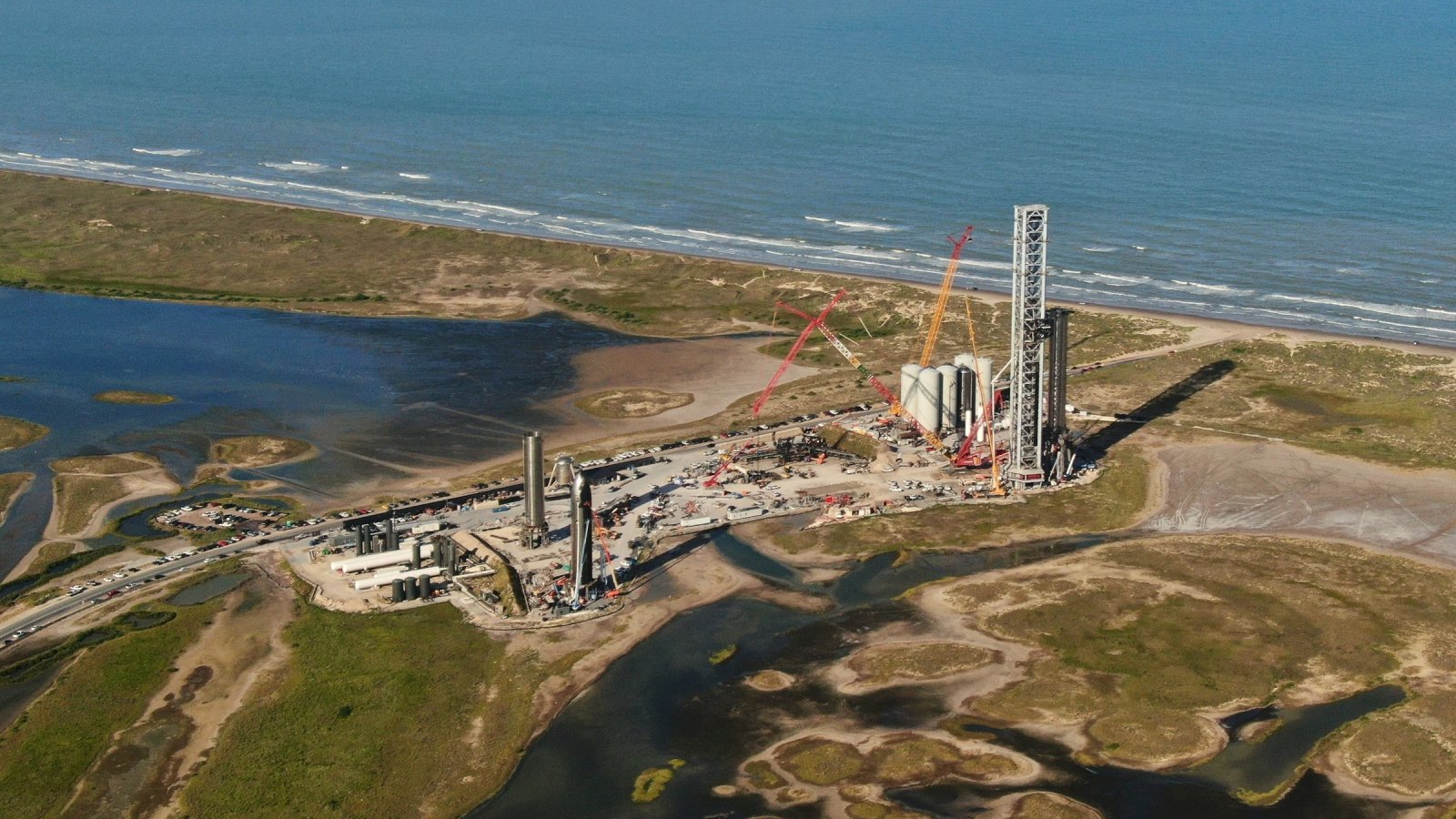
My view, and it is opinion: the catch handles the recovery side of that sum and leaves the refurbishment side open. Without a reflight cost, I have no price per flight to judge Starship on.
Next is that refueling demo. It was "not yet scheduled as of September 2026," and Wikipedia's infobox lists it as no earlier than the first quarter of 2027. My judgment: the ship catch is solved for exactly one flight so far.

Marcus Adeyemi
I build gaming PCs and test them until the fans give up. If a game stutters, I want to know why. Writing from Lagos.
View profileMore from Marcus Adeyemi
View all →

Recommended for you
More stories →
Outlook is recovering on day two, and Microsoft says it has no indication of a hack
Which Xiaomi, Redmi and Poco Phones Get HyperOS 4, and Which Were Dropped
What the Red Dot on Your Apple Watch Means, and the Other Status Icons at the Top

Leave a Comment