Can you still get Mounjaro on the NHS if your GP opts out?
GP practices can choose whether to prescribe Mounjaro. This covers how the funding works, who qualifies in 2026/27, which NHS routes remain if your practice opts out, and what to ask your practice and your ICB.

views
I keep hearing one line about Mounjaro, the weight-loss jab. If I qualify, my GP has to give it to me.
Then a count made me curious. The Guardian reported a Pulse investigation on 23 November 2026. It found that 21 of 36 integrated care boards (ICBs) have scrapped payments to GP practices. Those payments were for prescribing and monitoring Mounjaro. I wanted to know what they covered, and what losing them changes. Can you still get Mounjaro on the NHS if your practice opts out?
Sometimes, yes. If your practice opts out, the main NHS route left is a specialist weight management service. The other option is another delivery model your ICB runs.
Who pays for the drug, and who pays the practice?
I started with the practice's side. NHS England says the payments for support and monitoring now sit in the national GP contract. They pay for the practice's work, not for the cost of the drug.
From 1 April 2026, that work runs through new QOF indicators in the 2026/27 contract. QOF is the scheme that pays practices for meeting set standards of care.
What did the contract replace? Local enhanced services, the local arrangements some ICBs used to pay practices for this work. NHS England calls the switch "replacing varied local arrangements with a clear, nationally funded approach."
How many ICBs still pay locally? Four. Nine never had a local enhanced service at all.
ICBs also get a rollout allocation for 2025/26. NHS England's interim commissioning guidance says that allocation is fixed. It is not adjusted for how many patients actually start the drug. It is not ring-fenced either, and the costs of managing patients in primary care are built into the 2026/27 QOF.
Practices choose whether to take part. Cheshire and Merseyside ICB tells patients that GP participation is optional, so uptake may vary between practices. That one fact answers the claim I keep hearing.
Who qualifies right now?
NICE recommended tirzepatide in December 2024, in its appraisal TA1026. It covers adults with overweight and obesity who have weight-related conditions. Its wider line is a BMI of at least 35 plus at least one such condition.
How many people meet that line? NICE estimated 3.4 million.
The NHS is starting with far fewer. NICE told NHS England to prioritise 220,000 patients, based on clinical need. That is the priority cohort for the first three years of a 12-year rollout.
Primary care funding has applied since 23 June 2025. It is phased by cohort and limited by capacity. NHS England's guidance sets out three primary care cohorts.
Cohort I started in 2025/26. It needs four or more qualifying conditions and a BMI of 40 or above. Cohort II comes in for 2026/27. It keeps the four conditions and takes a BMI of 35 to 39.9. Cohort III covers 2027/28 to 2028/29. It needs three or more conditions, with a BMI of 40 or above.
Five conditions count. They are high blood pressure, dyslipidaemia (abnormal blood fats), obstructive sleep apnoea, cardiovascular disease and type 2 diabetes.
So where is the line in 2026/27? A BMI of 35 or more, with at least four of the five conditions. With three conditions or fewer, you are outside the primary care cohorts this year. Three conditions and a BMI of 40 or above only come in with Cohort III, from 2027/28.
Ethnicity moves the threshold. The BMI cut-off is usually 2.5 kg/m² lower for some backgrounds. They are South Asian, Chinese, other Asian, Middle Eastern, Black African and African-Caribbean.
What happens when a practice opts out?
The main route then is a specialist weight management service. Specialist services have followed the full NICE population since 24 March 2025. That means a BMI of 35 plus one condition, where a prescribing clinician considers treatment appropriate.
An ICB may align specialist access with the primary care cohorts. Where it does, the cohort rules apply there too.
Each ICB also chooses how to deliver the drug. There are four models. They are community or local-based, general practice, specialist outreach, and shared care between a specialist and a GP. Wraparound care is mandatory. That means support with diet, nutrition and activity alongside the injections.
In January 2026, Healthwatch England said fewer than half of ICBs had introduced GP-led prescribing. It called the rollout uneven. One patient was told they would have to go on the Tier 3 weight management scheme, and that it would be "a long wait."
Speaking to The Guardian, Healthwatch England's acting chief executive, Chris McCann, said many people describe a postcode lottery in access to NHS-funded weight-loss drugs.
How do you find out what your area offers?
The routes vary by ICB, so the answers are local. The ICB counts also stop at the ICB. They cannot tell you whether your own surgery prescribes.
Start with your practice. Does it prescribe tirzepatide for weight loss? Cheshire and Merseyside ICB tells its patients to ask exactly that. It says it cannot tell them which practices will prescribe, and that prescribing may pause. Meeting the criteria does not guarantee access.
Next, look for your own ICB's statement on tirzepatide. Local rules decide what a prescription comes with. In Cheshire and Merseyside, wraparound support run by Reed Health is required. Treatment should normally stop if you lose less than 5% of your body weight. That check comes after six months on the highest dose you tolerate. Prescription charges apply unless you are exempt. Wegovy and Saxenda are not available there through GPs or the community service. These are one ICB's rules, and yours may set them differently.
Then ask about a specialist referral. Does your area run a specialist weight management service? Does it take referrals at the full NICE line, or only for the primary care cohorts? Those questions go to your practice or your ICB.
If you are not eligible, or nobody nearby prescribes, there are other NHS programmes. Cheshire and Merseyside points patients to local weight management services and the NHS Digital Weight Management Programme. It also lists Type 2 Diabetes Path to Remission and the NHS Diabetes Prevention Programme. Healthwatch England asks people to keep contacting their GP.
The reported groups, 21, nine and four, do not cover all 36 ICBs.
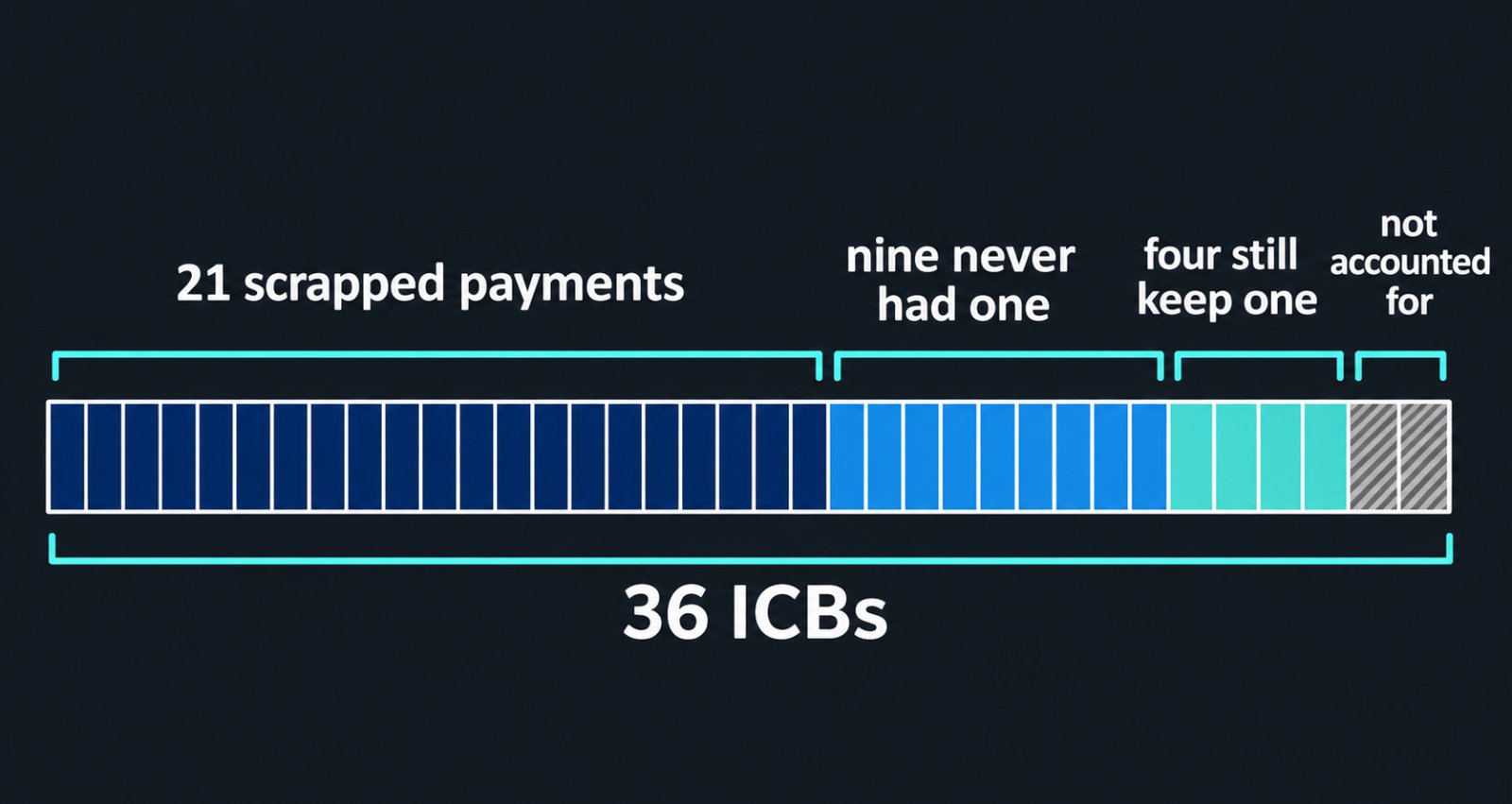
In the bar, the grey hatched end marks the ICBs outside those three groups.
Method note: the ICB counts come from a Pulse investigation reported by The Guardian, and the cohort dates and thresholds from NHS England's interim commissioning guidance.

Sherif Nassar
I write about sleep, exercise and diet claims, and the numbers behind them.
View profileMore from Sherif Nassar
View all →
Recommended for you
More stories →
Can Sugar-coated Stem Cells Really Cut Osteoporosis Fractures by 94%?
Most adults need no measles booster, but birth year and records decide who does

The New Pancreatic Cancer Pill's 90% Figure Measures Disease Control in 61 Patients

Leave a Comment