Do 2026 Cholesterol Guidelines Change Your LDL Target or Statin Plan?
The 2026 US cholesterol guideline brings back LDL goals and ties them to a 10-year risk score from the PREVENT calculator. This piece sets out the goals by risk group, where a statin comes in, how calcium scans, Lp(a) and apoB fit, what stays the same, and who the calculator does not suit.
views
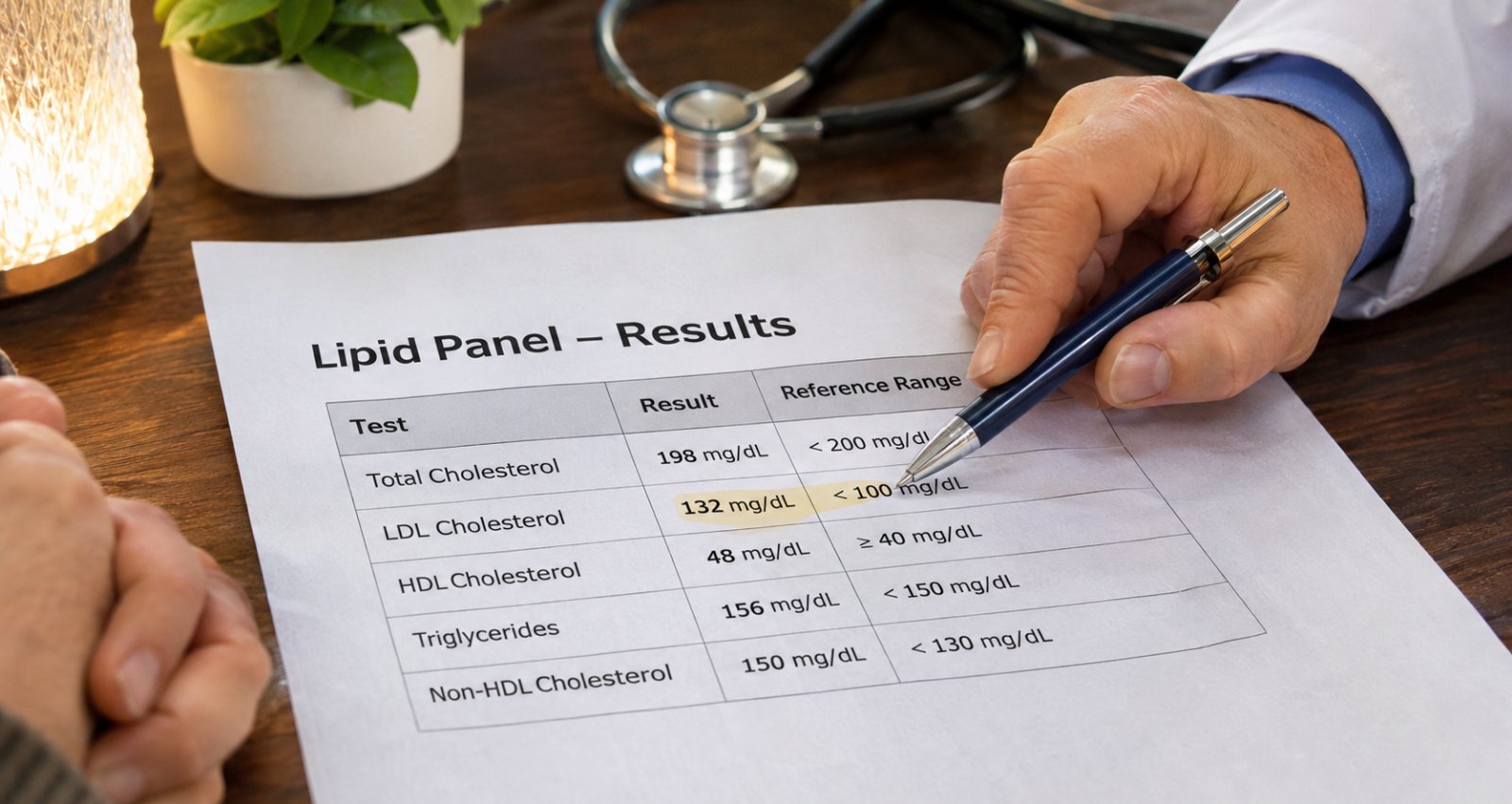
Your LDL goal can change under the 2026 US cholesterol guideline. It now depends on one number: your 10-year risk from a new calculator called PREVENT. The guideline sets LDL goals for people at borderline, intermediate and high risk, plus a stricter goal of under 55 mg/dL for people with established disease (secondary prevention). On statins, EBSCO's DynaMed summary of the guideline says one is reasonable from a 10-year risk of 3% and recommended from 5%.
A goal is the LDL level that treatment aims to get you below. LDL particles carry cholesterol through the blood, and the ones that lodge in artery walls build plaque. The guideline was issued on March 13, 2026 by the American College of Cardiology (ACC), the American Heart Association and nine other associations, and published in JACC and Circulation. It retires and replaces the 2018 cholesterol guideline and brings LDL and non-HDL cholesterol goals back.
Will my LDL goal change?
It depends on your risk group. Adults aged 30 to 79 with no known atherosclerotic cardiovascular disease (ASCVD), including silent (subclinical) atherosclerosis, are sorted by their 10-year PREVENT risk into four groups: low (under 3%), borderline (3% to under 5%), intermediate (5% to under 10%) and high (10% or higher). People with established disease are not scored with PREVENT, because the calculator is designed for adults without known ASCVD. They go straight to the secondary-prevention goal.
| Group | 10-year PREVENT risk | LDL goal |
|---|---|---|
| Borderline | 3% to under 5% | Under 100 mg/dL |
| Intermediate | 5% to under 10% | Under 100 mg/dL |
| High | 10% or higher | Under 70 mg/dL |
| Established disease (secondary prevention) | Not scored with PREVENT | Under 55 mg/dL |
Some people start treatment because of a diagnosis. The ACC's announcement says lipid-lowering therapy should start for people aged 40 and older with diabetes, HIV or chronic kidney disease stage 3 or higher.
Myth: the new goals mean everyone needs a statin.
Evidence: the claim is bigger than the data. The statin tiers begin at borderline risk, so the low group, under 3%, sits below them. At borderline risk a statin is graded "reasonable" and only becomes recommended at intermediate risk. Reasonable is the weaker of those two grades.
The guideline does lean toward treating earlier. Blumenthal, the guideline's chair, said that "we should consider adding lipid-lowering medication earlier than we would have considered 10 years ago." The guideline is written for clinicians, and whether you start, change or stop a statin is a decision to make with your own doctor.
How is my risk scored now?
PREVENT replaces the Pooled Cohort Equations, the calculator the 2018 guideline relied on, and it adds kidney function to the estimate. The age window for first-prevention decisions now runs from 30 to 79, against 40 to 75 in 2018, which widens the scoring range at both ends. If your last estimate came from the older equations, ask for your PREVENT figure, since your LDL goal now depends on it.
A modelling preprint posted on arXiv estimated what the new rules mean for the number of statin users. It applied them to NHANES national survey data from 2011 to 2023 covering 24,199 adults aged 30 to 79. A preprint is the form a paper takes before journal peer review, and its figures are estimates. At the guideline's class 1 threshold, its strongest grade of recommendation, the estimated number of adults receiving or recommended a statin fell by about 3.0 million. With 30-year risk added for adults aged 30 to 59, the estimate rose by about 20.8 million. The two figures count against different thresholds: the first uses the class 1 threshold alone, and the second adds 30-year risk for the younger group.
Where do calcium scans, Lp(a) and apoB fit?
A coronary artery calcium (CAC) scan is a CT scan that measures calcium in the heart's arteries, where calcium marks plaque that has already formed. EBSCO's summary says the scan is recommended for men aged 40 and older and women aged 45 and older at borderline or intermediate risk. The result can push the plan either way. Any calcium at all supports an LDL goal under 100 mg/dL, and a score of zero may allow a statin to be deferred. If you fall in those age bands and risk groups, ask whether a scan would change your plan.

Lipoprotein(a), or Lp(a), is a cholesterol-carrying particle similar to LDL. The guideline says it should be measured at least once in adulthood and treats 125 nmol/L or 50 mg/dL as high. The two figures cover the two units labs report it in. Repeat testing is generally not needed, so if yours has never been checked, that single test is the one to ask about.
ApoB is a protein carried on LDL and similar particles. Measuring it may be used to assess any cardiovascular risk that remains (residual risk) and to guide treatment. If your LDL is already at goal on treatment, an apoB test is a fair one to raise.
What stays the same, and who the calculator does not fit
Statins remain the foundation of lipid-lowering and risk reduction. Non-HDL cholesterol counts the cholesterol in every carrying particle except HDL, and its targets still sit 30 mg/dL above the matching LDL targets. Lifestyle and shared decision-making between patient and clinician stay central.
People with established disease remain outside the risk calculator and are treated toward the under-55 goal. A second group should not lean on the score either. The Family Heart Foundation says PREVENT is not intended for people with familial hypercholesterolemia, an inherited condition that keeps LDL high from birth, because the calculator can underestimate their lifetime cardiovascular risk.
An expert in Medical News Today's report on the guideline says it is sensible to ask your clinician about an LDL target set for you rather than only the one your risk group carries, especially if you have a family history.

Camila Restrepo
Camila Restrepo writes about fitness trackers and checks the study behind every health claim she quotes. Medellin, Colombia.
View profileMore from Camila Restrepo
View all →
Is It Too Late to Get a Flu Shot Before Thanksgiving?

A spouse's general-purpose FSA can block your HSA contributions, and old ones can be fixed

The 1099 Line Moves to $2,000 for 2026 Payments, but Income Under It Can Still Be Taxable
Recommended for you
More stories →
Can Sugar-coated Stem Cells Really Cut Osteoporosis Fractures by 94%?
Most adults need no measles booster, but birth year and records decide who does

The New Pancreatic Cancer Pill's 90% Figure Measures Disease Control in 61 Patients

Leave a Comment