New York's AI Chatbot Toy Ban Starts Feb. 22, 2027
New York's ban on AI chatbot toys takes effect Feb. 22, 2027, 90 days after it was signed, and runs for five years. It covers making and selling these toys, not owning one.

views
New York's chatbot toy law turns on one definition. A chatbot toy, in the statute's words, "shall mean when an AI companion is embedded in or integrated with a children's toy." The ban built on it takes effect on Feb. 22, 2027, 90 days after the governor signed it, and runs for five years. It stops these toys from being made or sold in the state. Its wording says nothing about a toy a family already owns.
What the bill says
The measure is S9408-A in the Senate and A11144-B in the Assembly. Governor Kathy Hochul signed it on Tuesday, Nov. 24 as Chapter 416. Besides the chatbot toy, the bill defines an operator as any person or entity that operates or provides an AI companion in a children's toy.
No one "shall manufacture, exchange, hold for sale, distribute, or sell any chatbot toy in this state." The Attorney General enforces the ban and may seek civil penalties of up to $15,000 per day for each violation, under section 1802.
The act takes effect on the ninetieth day after it becomes law. It expires, and is deemed repealed, five years after that effective date.
Which toys count
The bill does not spell out what an AI companion is. It defines the term by reference to subdivision four of section 1700, which comes from the separate companion-chatbot law New York passed in 2025. A chatbot toy is an AI companion of that kind, embedded in or integrated with a children's toy.
What brings a toy under the law is the AI companion inside it or connected to it. A plush, a doll or a robot without one falls outside the definition.
The law takes its meaning of a children's toy from a federal provision, 15 USC § 2057c(g), and that definition sets the age limit at children 12 and under. Notebookcheck describes the covered products as talking stuffed animals, dolls and robots that go online. When the governor signed the bill she cited watchdog testing of toys for ages 3 to 12.
Feb. 22, 2027, and the separate chatbot law
Ninety days after the Nov. 24 signing is Feb. 22, 2027, and the ban runs for five years from that date. The ban does not apply to this holiday shopping season.
On Oct. 28 Hochul signed a different law, which deals with AI chatbots and minors more widely. It is also separate from the 2025 companion-chatbot law that supplies the toy ban's definition of an AI companion. The governor's release on it does not mention AI toys.
The toy ban (S9408-A, Chapter 416) starts on Feb. 22, 2027 and allows civil penalties of up to $15,000 per day for each violation. The Oct. 28 chatbot law allows penalties of up to $25,000 per violation. The Next Web, citing the Associated Press, reports that it takes effect on Jan. 1, while the governor's release gives no date, only the coming months. The Attorney General enforces both. The chatbot law's cap is per violation, while the toy law's is per day for each violation, so the ceiling under the toy law rises the longer a violation goes on.
Checking a toy you own or plan to buy
The prohibition lists five acts, from manufacturing to selling. Using or owning a toy is not among them, and Notebookcheck reads the law the same way: making and selling are affected, owning and using are not.
Families who already own one of these toys are not required to throw it away. A toy given as a gift this season is in the same position, since the ban has not started and does not reach ownership once it does.
When she signed the bill, Hochul urged parents to check three things: whether a toy has an AI companion, what data it collects, and whether it can hold open-ended conversations. The first is the feature the law turns on. The other two are about what the toy does once it is switched on.
The box and the online listing describe a toy's features before it is opened, and the privacy terms set out what the maker collects.
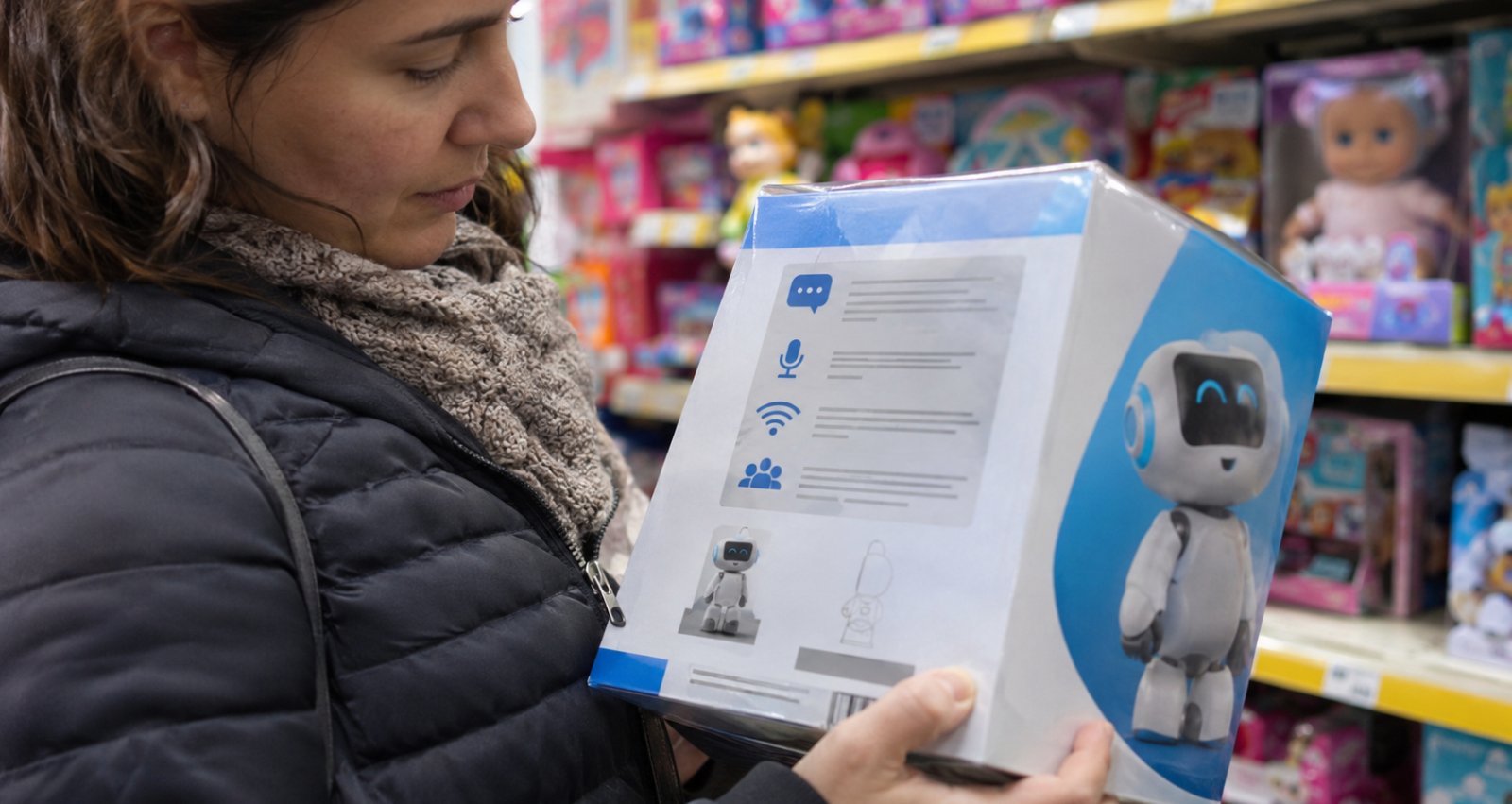
- Read the box or the online listing for an AI companion before you buy, and check any talking toy already in the house for one.
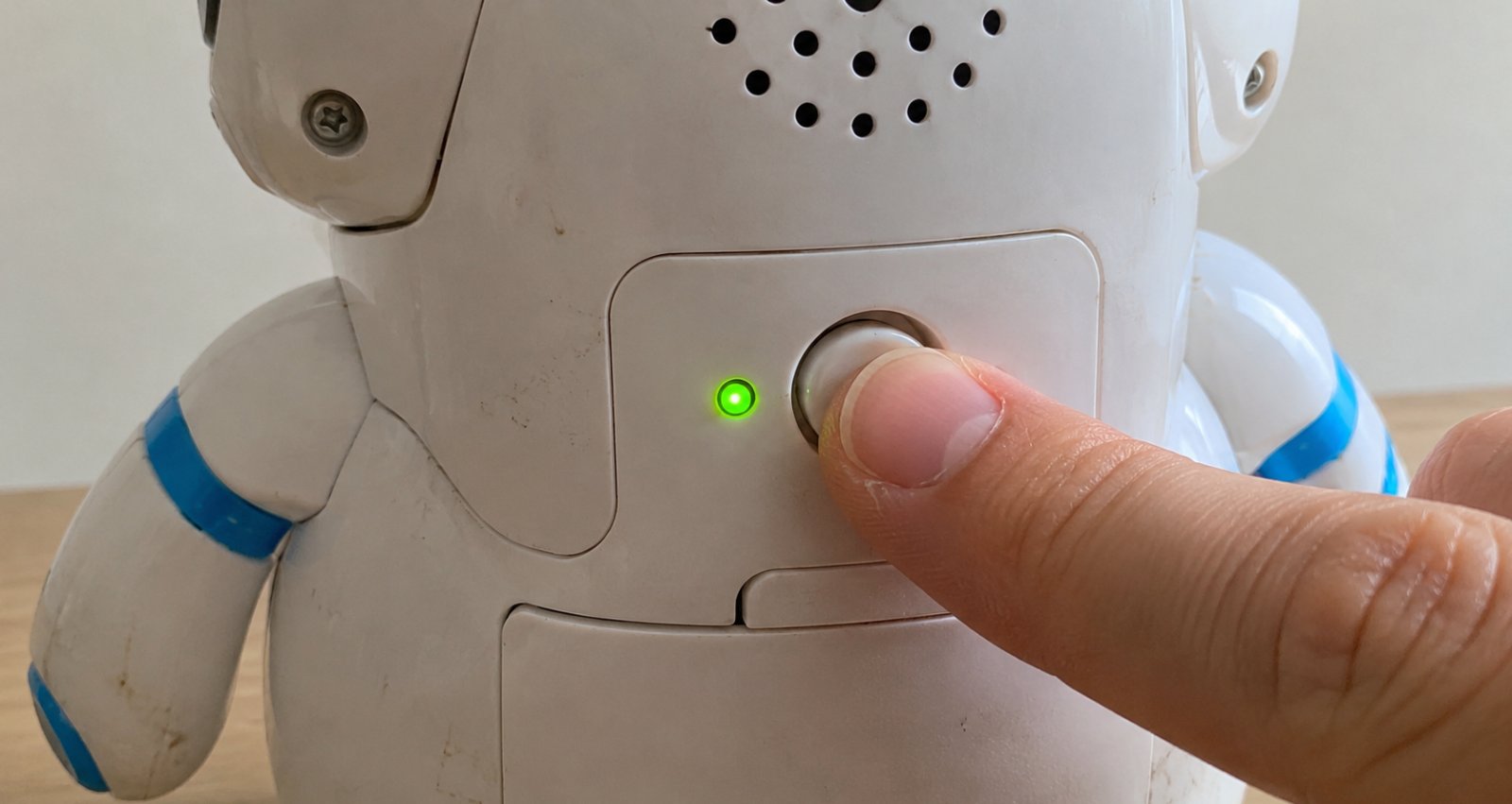
- Find out what data the toy collects. The testing the governor cited found toys that could record a child's voice or scan their face, so read the privacy terms and go through the toy's settings.
- Find out whether it can hold open-ended conversations. In the same testing, safety limits weakened as conversations went on.
- Look for parental controls before the toy is wrapped, and turn on any it has. Most of the toys tested had few or none.
Who can be fined
The ban reaches makers and sellers, and the Attorney General can pursue either. For a shop, the list covers holding a chatbot toy for sale after Feb. 22 as well as selling one. It also covers exchanging and distributing.
Under section 1802, in an action the Attorney General brings against an operator, preliminary relief may be granted under Article 63 of the Civil Practice Law and Rules, and if the court finds a violation, no proof is required that anyone was injured.

Erlend Haugland
For nine years, Erlend worked the parts counter at a dealership outside Stavanger, where a lot of conversations started with a recall letter someone hadn't opened. Now he covers cars and EV news: recalls, warranties, res...
View profileMore from Erlend Haugland
View all →
Recommended for you
More stories →
iOS 27.3 Beta Puts a Daily Cap on Siri's Cloud Features, Raised by iCloud+
How Much Does Your Home Sound System Cost to Run Each Month?

Where the Monitor Cable Goes on a Desktop With a Graphics Card

Leave a Comment