Do Alcohol Calories Count? The 98-Calorie Floor and What Comes With It
Where the 98-calorie floor per US standard drink comes from, a sourced table of beer, light beer, wine, spirits, seltzer and mixed drinks, what two small calorimetry studies show about fat burning and heat loss, and the drinking-day food effect.
views
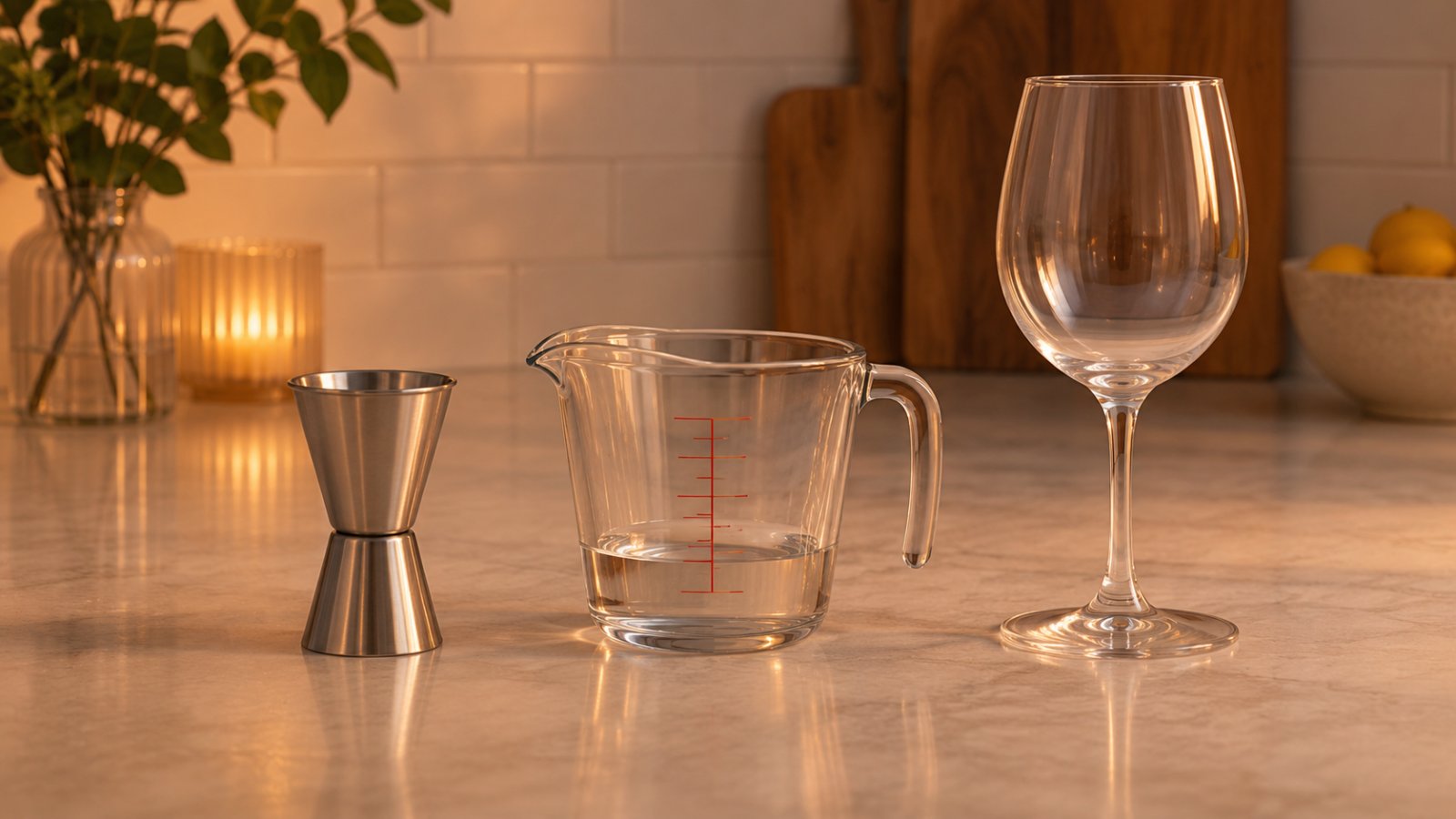
Before asking whether alcohol calories count, it helps to know what is being counted. NIAAA's Rethinking Drinking defines a US standard drink as any beverage containing 0.6 fl oz, or 14 grams, of pure alcohol. The 2015 Dietary Guidelines appendix says those 14 grams contribute 98 calories, and that is before any sugar, malt or mixer. Whether the body actually gets the full 98 is a question for the calorimetry studies further down. Two more things sit next to the glass that a single number per drink leaves out: the fat your body burns less of while alcohol is in the mix, and the food that tends to turn up on drinking days.
Divide 98 by 14 and you get the familiar 7 calories per gram. The guidelines imply that figure but never print it, though the arithmetic is simple. The more useful detail is that NIAAA defines the drink by its alcohol content, not by serving size, and serving sizes change with the type and strength of the drink. So 98 calories is a floor. Beer, wine and vodka all start there, and the carbohydrate, sugar or cola goes on top. This is why I count in standard drinks and not in glasses. A glass is whatever the bar happens to own.
The drinks side by side
The table uses the serving sizes the sources use. The calorie figures come from the Center for Science in the Public Interest and the Dietary Guidelines appendix, and the last column says which one each figure comes from. The serving sizes that count as one standard drink come from NIAAA. Where NIAAA gives a drink as its own example of one standard drink, the table says 1. For the other rows I only say whether the drink is above or below one, going by its size and strength, and I give no figure. The strengths are the sources' approximate figures. Where a source gives no number, the cell says so.
| Drink | Serving | Strength (approximate) | Standard drinks | About kcal | Calorie source |
|---|---|---|---|---|---|
| Regular beer | 12 fl oz | about 5% | 1 (NIAAA's own example) | 150 | CSPI; Dietary Guidelines |
| Light beer | 12 fl oz | about 4% | under 1 (same size as regular beer, lower strength) | 100 | CSPI |
| Wine, standard pour | 5 fl oz | about 12% | 1 | 120 | CSPI; Dietary Guidelines |
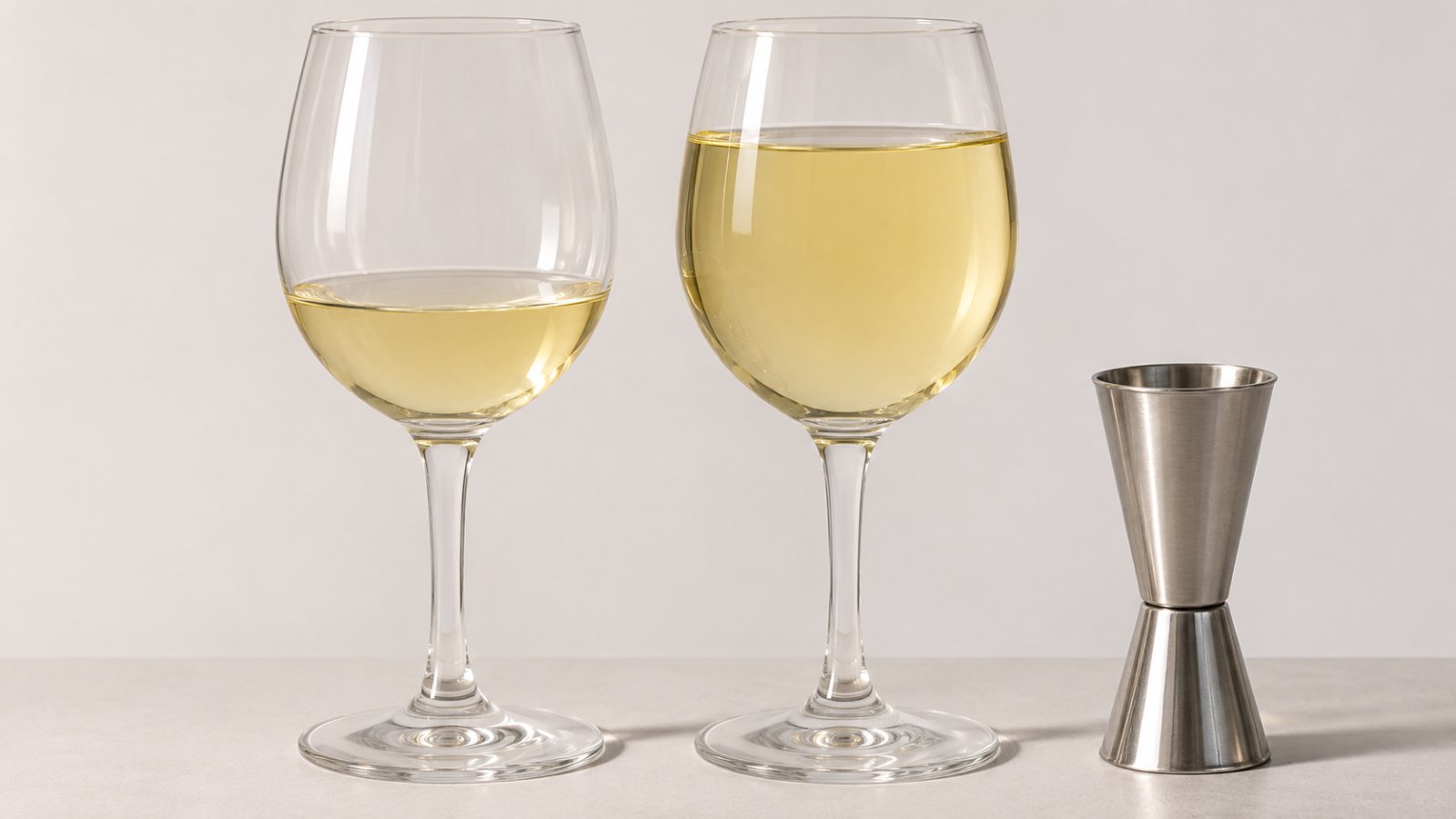
| Wine, large pour | 9 fl oz | about 12% (my assumption) | more than 1 (larger than the 5 fl oz pour) | 220 | CSPI |
| Spirits, one shot | 1.5 fl oz | about 40% | 1 | 100 to 120 | CSPI |
| Rum and cola | 7 fl oz | rum at 40%; amount of rum not given | not given | 155 | Dietary Guidelines |
| Margarita | small glass to oversized or frozen | not given | not given | 200 to 300 or more | CSPI |
| Hard seltzer | 8 to 10 fl oz counts as one drink | about 7% | 1 at that size | CSPI gives no figure; check the can. CSPI says no more than light beer | CSPI |
Take the 98-calorie floor off each row and the table looks different. In a 5 oz glass of wine, 98 of the roughly 120 calories are alcohol, so wine is nearly all floor. A regular beer at about 150 carries more on top of its 98. Light beer at 4% holds less alcohol than a 5% regular beer of the same 12 oz, so part of what it saves you over regular beer comes from there being less alcohol in the can, not less of anything else. I still think it is the most useful swap on the list. It earns that place by being a weaker drink, and a 4% beer you drink more of hands the saving straight back.
Hard seltzer has the least data behind it. CSPI says it has no more calories than light beer, with no exact figure given, so the honest entry is a blank and a note to read the can. NIAAA counts 8 to 10 fl oz of a roughly 7% malt beverage as one standard drink, so a bigger or stronger can is more than one, and the floor rises with it. The sources give only two mixed drinks, and between them they cover the widest range. The Guidelines put a 7 oz rum and cola at about 155 calories, against CSPI's 100 to 120 for a shot, but the Guidelines don't say how much rum is in the drink, so setting those two figures against each other gives no clean measure of what the cola adds. A margarita runs about 200 to 300 or more calories, against 100 to 120 for a shot. The 9 oz wine pour is the other one to watch. It shows up as one glass on the bill, but it is more than one standard drink and about 220 calories.
What the body does with alcohol
A meal with alcohol added is the situation the best data here actually looked at. Murgatroyd and colleagues in 1996 studied eleven people using whole-body calorimetry. Each person stays in a sealed chamber, and the air they use shows which fuels the body is burning. When alcohol was added to a meal, fat oxidation was suppressed overnight, so less fat was burned through the night. When people say the body deals with alcohol first, this is the part that has evidence behind it in these sources. I can't tell you how big the effect was. I haven't checked the study's exact figures against the full paper, so I've left them out, and with eleven subjects any figure would be rough anyway.
The thermic effect is the share of a food's energy lost as heat while your body processes it. A fuel with a large thermic effect would leave you fewer usable calories, and that is the hope behind "alcohol burns itself off." The same study found that alcohol produced little heat, and the authors concluded alcohol has no special heat-producing capacity. Sonko and colleagues in 1994 found alcohol's thermic effect was similar to carbohydrate's, with no evidence of futile cycling. Futile cycling would be the body running energy round a loop and wasting it as heat. Neither source, as I have it, gives a percentage for alcohol's thermic effect, so I can't put a number on the heat loss. What they do support is that alcohol behaves roughly like carbohydrate here, not like a fuel that burns itself away.
So the calories count, and that leaves one popular claim I would drop. "Alcohol calories don't count" depends on alcohol being wasted as heat, and two small calorimetry studies found no sign of that. Murgatroyd shows less fat being burned while alcohol is in the mix, and none of these sources measures how much alcohol, if any, is turned into fat directly.
Food on drinking days
An Obesity Reviews paper from 2026 by Grech and colleagues, described by the University of Sydney, looked at national survey data and found people ate more savoury foods on drinking days than on non-drinking days. Co-author Simpson put it this way: "It is not simply a matter of the calories in alcohol itself." An earlier presentation of the same research, reported in 2022, found a split. Some drinkers ate less overall and others ate more, and the researchers said drinking need not lead to weight gain. I find that split the most useful part, with a caveat. It comes from survey data, so it describes what groups of people did, not what alcohol will do to you. A survey can't sort you into the drinkers who eat less or the ones who eat more, but a few weeks of your own log can at least show you your habit.
What I would check before buying a round
- The mixer. The Guidelines' 7 oz rum and cola is about 155 calories, and a margarita runs 200 to 300 or more, against 100 to 120 for a plain shot.
- Which way you tend to go on drinking nights, eating less or eating more. Decide on the food before the first glass, not after the third.
- A log with drinks and food in the same place, counting at least 98 per standard drink plus the mixer, kept for a few weeks so you are working from your own pattern and not a survey average.

Hiroshi Tanabe
Hiroshi Tanabe shot wedding videos in Osaka for eight years. The cameras he bought back then, and some he regretted, are why he reviews them now. His tests of microphones and gimbals tend to run long, because he uses the...
View profileMore from Hiroshi Tanabe
View all →
RTX 5070 Ti vs RX 9070 XT vs 4080 Super: Which to Buy for a First PC Build

Before You Install a Home Sauna: Electrical, Ventilation, Permits and Running Cost
Hear Your World Feel Your Music - Bose Ultra Open Earbuds Review
Recommended for you
More stories →
Three Dairy Servings a Day for 12 Weeks: What the Trial Shows and Where It Stops
Statin or Not: Is a Calcium Scan Worth Paying For? What the CorCal Trial Found

Modern Student’s Grooming Game Changer Review
Leave a Comment