Make-Ahead Thanksgiving Gravy Without Drippings, and How to Fix It on the Day
Three make-ahead gravy methods from named sources, fridge and freezer limits that don't agree, how to freeze it, a timeline counted back from Thanksgiving Day, reheating steps and a fix chart for lumpy, thin, bland and salty gravy.
views
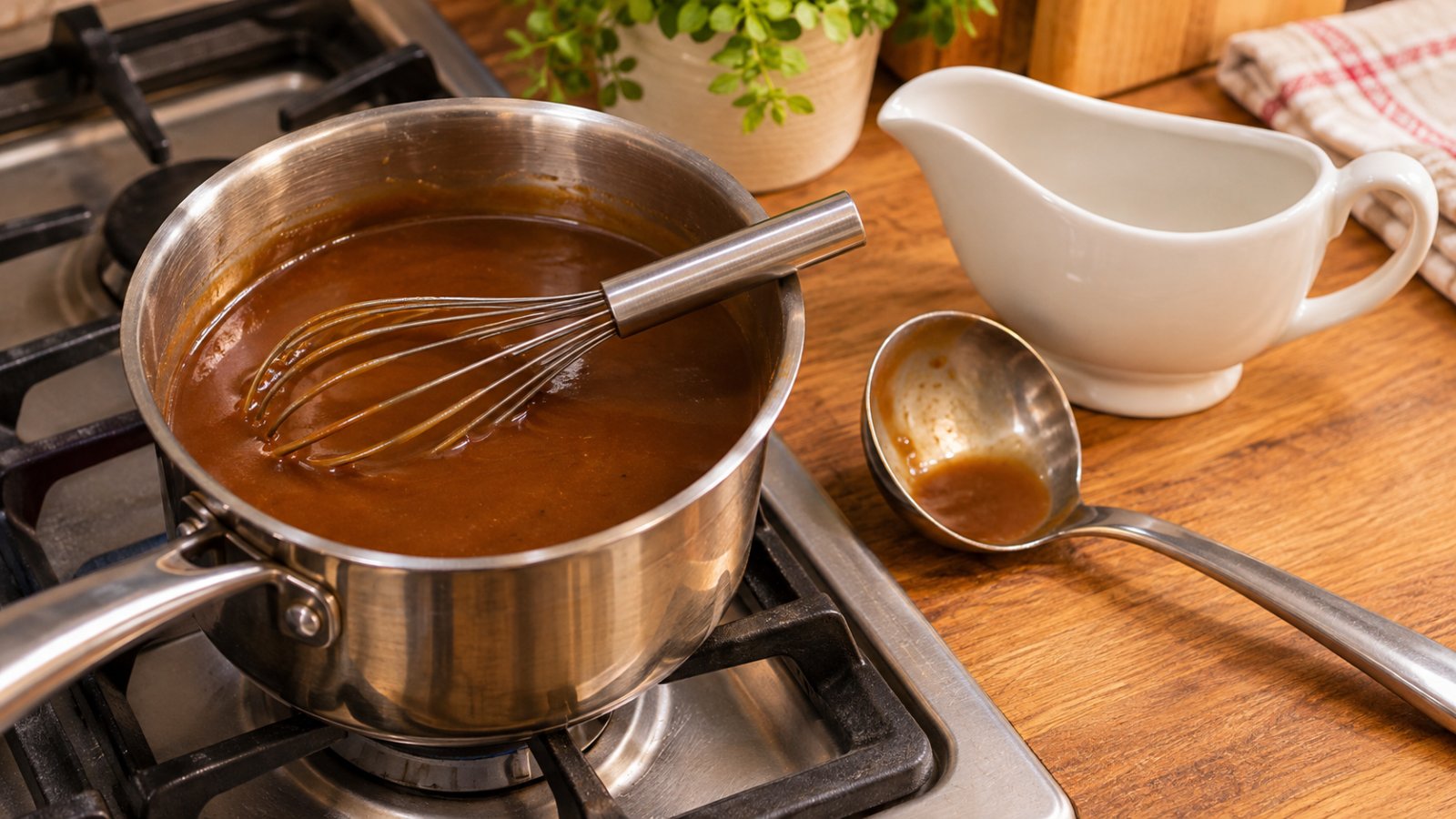
You can make Thanksgiving gravy without drippings, and you can make it well ahead. Cook's Illustrated says finished gravy can be frozen up to two weeks ahead and gently reheated, and that you don't need drippings for it to taste great. On the day, the gravy only needs reheating.
What to do with drippings
Drippings come out of the roasting pan, so there are none until the turkey is out of the oven. They show up last. Cook's Illustrated puts it plainly: "you don't need drippings to make it taste great," though you should "certainly add them if you have them."
Its advice on adding them comes with two conditions. Defat them first, because the stock already adds enough fat. Then add no more than 1/4 cup, or the gravy will be too thin.
Three make-ahead methods
None of the cited sources compares these methods on flavour. Only Two Kooks in the Kitchen gives prep and cooking times, and none of them gives a method for gravy made from store-bought stock.
| Method | What the source says | How far ahead |
|---|---|---|
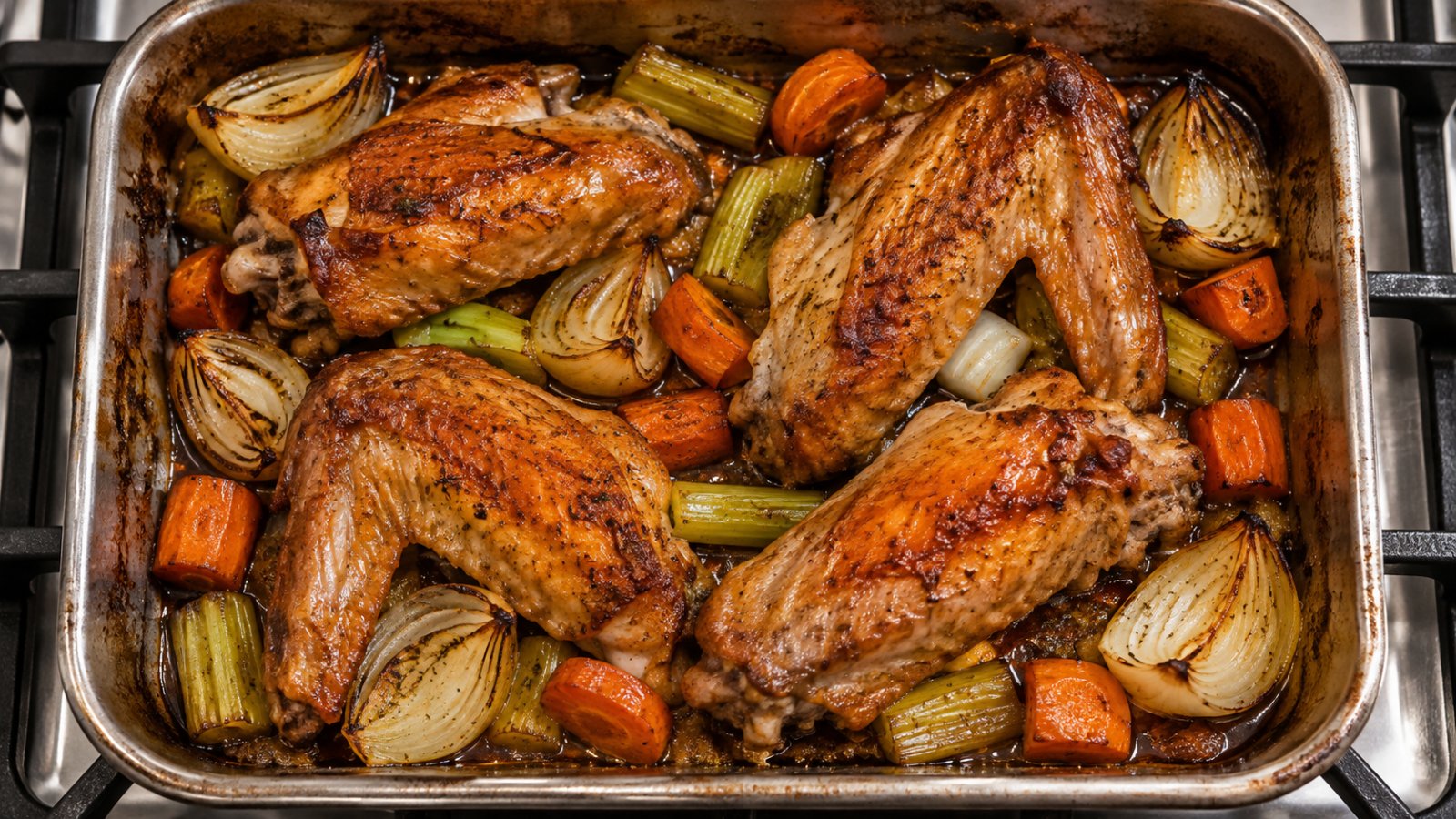
| Roasted wing stock gravy | Two Kooks in the Kitchen: 15 minutes prep, 2 hours cooking. The wings roast with vegetables for 1 hour, until the wings are golden brown and the vegetables begin to caramelise | 3 to 4 days in the fridge, up to 4 months in the freezer |
| Browned roux with turkey stock | Cook's Illustrated: make the turkey stock ahead and brown the roux | Stock up to 3 days ahead. Finished gravy up to 2 weeks ahead, frozen |
| Drippings added on the day | Cook's Illustrated: gently reheat the made-ahead gravy with the drippings, defatted, 1/4 cup at most | On the day |
Thickening, and keeping lumps out
Browning the roux does more than add colour. Cook's Illustrated says it gives a gravy that "stays fluid longer," which helps when it has to sit and wait.
For gravy that comes out too thin, Taste of Home says a roux works when there's time, but calls a cornstarch slurry "the easiest and fastest way." Taste of Home also passes on a suggestion to use Wondra flour, because it doesn't clump as easily.
If lumps get in anyway, The Takeout lists three fixes: an immersion blender, whisking, or a fine-mesh sieve. It calls the immersion blender the easiest, since you "give it a blitz right there in the pan," and says other machines will work just as well. The sieve, it says, catches the lumps and lets the smooth liquid through.
None of the cited sources gives per-cup ratios for flour, roux or cornstarch.
Fridge and freezer limits, source by source
| Source | Fridge | Freezer | Reheating |
|---|---|---|---|
| Cook's Illustrated | Turkey stock, up to 3 days ahead | Finished gravy, up to 2 weeks ahead | Gently, with the drippings if using |
| Two Kooks in the Kitchen | Gravy, 3 to 4 days | Gravy, up to 4 months (its FAQ says 4 to 6 months) | Stovetop, medium-low; whisk if it separates; thin with broth if too thick |
| Tasting Table, citing USDA | Gravy, 3 to 4 days | Gravy, 4 to 6 months | Bring it to a rolling boil before serving |
The fridge figures cover different things. Cook's Illustrated's 3 days is for the turkey stock. Two Kooks and Tasting Table give 3 to 4 days for the finished gravy.
The freezer figures are all for gravy, and they range from two weeks to six months, which is a wide spread for one sauce. For Thanksgiving it settles itself: gravy frozen no more than two weeks ahead is inside all three limits, since Cook's Illustrated's two weeks is the shortest.
On reheating, Cook's Illustrated says gently and Two Kooks says medium-low on the stove, whisking if it has separated. Tasting Table says to bring it to a rolling boil before serving. Put together, the three sources give an order: medium-low first, then a rolling boil just before it goes to the table. If it has gone too thick, Two Kooks says to thin it with broth.
Getting it into the freezer
Two Kooks in the Kitchen says to let the gravy cool, then put it in a sealed zipper lock bag or an airtight container. Its recipe gives up to 4 months from there, and its own FAQ says 4 to 6 months, so the page doesn't agree with itself. Tasting Table's USDA figure matches the FAQ.
None of the cited sources gives a method for thawing frozen gravy before it goes on the stove.
Timeline to Thanksgiving Day
- Up to two weeks before: make the gravy, cool it and freeze it (Cook's Illustrated; Two Kooks for the container).
- Up to 3 days before: make and refrigerate Cook's Illustrated's turkey stock.
- No more than 3 to 4 days before: make any gravy that will sit in the fridge (Two Kooks and Tasting Table).
- Thanksgiving Day: reheat on medium-low, whisking if it separates (Two Kooks).
- Thanksgiving Day, drippings: defat them and add 1/4 cup at most (Cook's Illustrated).
- Before serving: bring it to a rolling boil (Tasting Table).
- Leftovers: back in the fridge, 3 to 4 days (Two Kooks and Tasting Table).
Fix chart for the day
| Problem | Main fix | Also works | Source |
|---|---|---|---|
| Lumpy | Immersion blender, right in the pan | Whisking, or a fine-mesh sieve, which catches the lumps and lets the smooth liquid through. To prevent lumps: Wondra flour | The Takeout; Taste of Home for Wondra |
| Too thin | Cornstarch slurry | A roux, when there's time. More than 1/4 cup of drippings thins it | Taste of Home; Cook's Illustrated on drippings |
| Bland | A bouillon cube | Herbs, or a splash of wine or cognac | Taste of Home |
| Salty | Unsalted liquid, such as water or unseasoned broth | Cream. It may then need thickening or seasoning again | Taste of Home |
The salty fix has a catch. Taste of Home calls unsalted liquid the simplest way, and that extra liquid is the reason the gravy may then need thickening or seasoning again. Sort the salt out first, then deal with the thickness.
The sieve does the job. It's also one more thing to wash, and The Takeout calls the immersion blender the easiest anyway.

Duarte Pinheiro
For seven years, the night desk of a small guesthouse in Porto was Duarte Pinheiro's job. He sorted out lost bookings, dead chargers and guests who couldn't get online. Now he writes about travel and the internet side of...
View profileMore from Duarte Pinheiro
View all →
The EU's Leaked Draft List of Ten Prohibited Design Tricks, Row by Row

What the Red Dot on Your Apple Watch Means, and the Other Status Icons at the Top


Leave a Comment