RTX 5070 Ti vs RX 9070 XT vs 4080 Super: Which to Buy for a First PC Build
Compares the RTX 5070 Ti and RX 9070 XT on price, memory, power, PSU, ray tracing and upscaling, adds the RTX 4080 Super's specs and launch price where the sources cover it, and gives plain pick-this-if rules and a pre-purchase checklist for a first build.
views
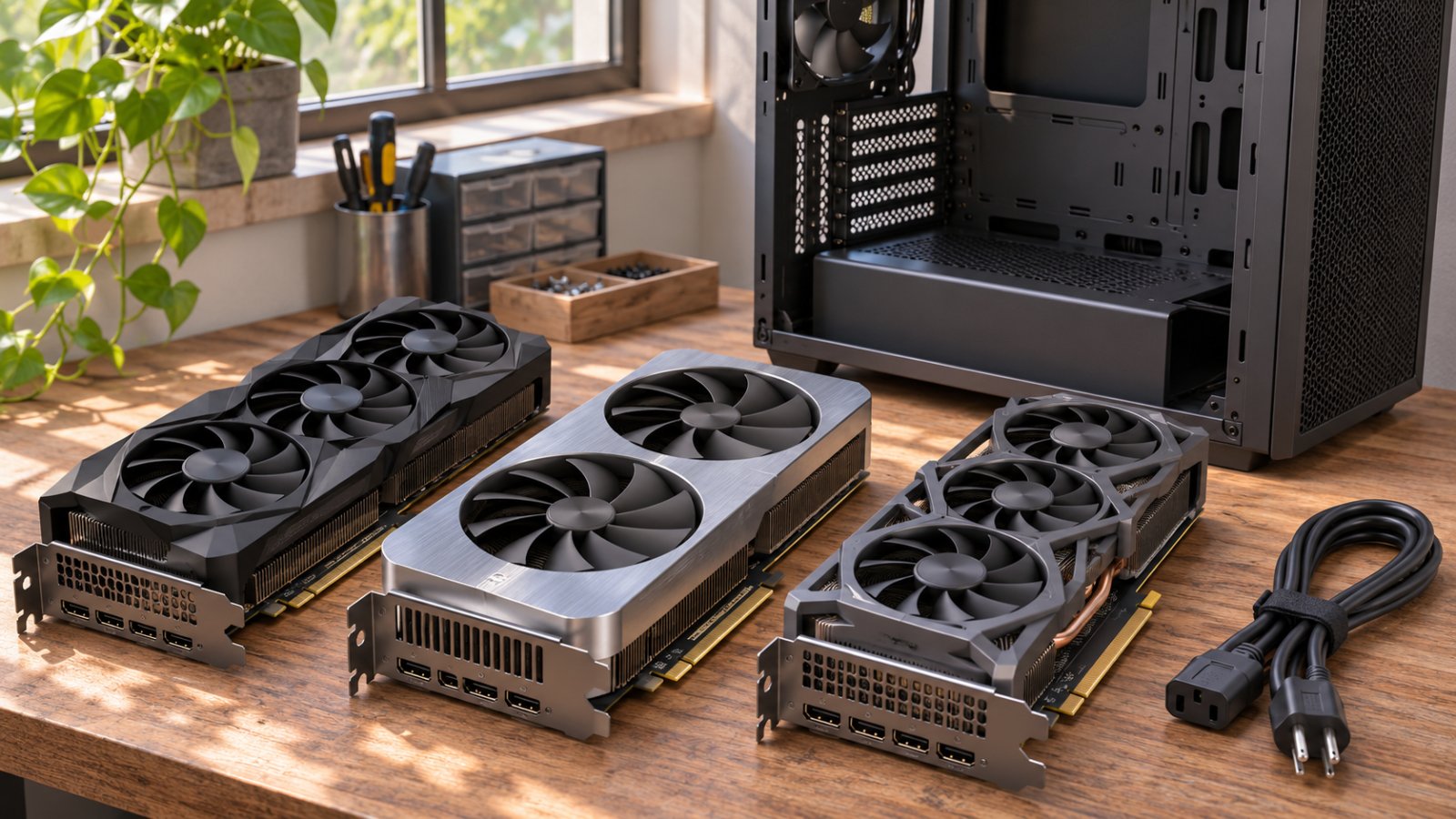
Say you have most of a first build picked out. The case is in the basket and the processor is chosen, and the line still blank on the parts list is the graphics card. Three names keep coming back in every thread you read: Nvidia's RTX 5070 Ti, AMD's Radeon RX 9070 XT and the older RTX 4080 Super. The first review you open sets the tone. Tom's Hardware's review of the RTX 5070 Ti calls it "a proper high-end GPU, if you can find it at MSRP," and the second half of that headline is the part that has given buyers trouble. Nvidia's list price is $749, but when SlashGear compared it with the 9070 XT, the cheapest 5070 Ti it found was $909. The AMD card lists at $599 and was selling for $800 to $1,000. SlashGear doesn't say when it checked, so those street figures tell you the market moves without telling you where it stands today.
The third name is stranger still. The RTX 4080 Super went on sale on January 31, 2024 at $1,000, according to GamersNexus. A GamesGPU report, which Nvidia has not confirmed, says production ended later that year ahead of the RTX 5080. New stock is therefore scarce, and whatever turns up is priced by whoever happens to hold it. So a first-time builder ends up choosing between two list prices the shops weren't honouring and one card nobody makes any more.
My answer comes from reading the specs and the published reviews, not from testing these cards myself. For most first builds, the 9070 XT is the card to buy when you can get it at or near its $599 list price. Club386 called the base $599 / £569 card "nothing short of a bullseye," and I agree with its reasoning. At that price you get 16 GB of memory on a 256-bit bus, the same as the 5070 Ti, and AMD's recommended 750 W power supply matches Nvidia's, all at a lower list price: $599 against $749. That difference is real money in a first build, enough for a larger SSD or a better power supply than you would otherwise pick. What you give up is software and some speed on paper. SlashGear reports that reviewers agree the 5070 Ti handles ray tracing better, says far fewer games support AMD's FSR 4 upscaler than Nvidia's DLSS, and points out that the 9070 XT uses older GDDR6 memory where the 5070 Ti has GDDR7. All of this depends on the price gap. If SlashGear's undated street prices were still current, a 9070 XT at $800 to $1,000 could cost as much as a 5070 Ti from $909, or more. That is my inference from figures with no check date, but it is exactly the situation in which I would buy the Nvidia card instead.
The specs side by side
| RTX 5070 Ti | RX 9070 XT | RTX 4080 Super | |
|---|---|---|---|
| List or launch price | $749 MSRP | $599 / £569 MSRP | $1,000 at launch, January 31, 2024 |
| Street price seen | From $909 (SlashGear, undated) | $800 to $1,000 (SlashGear, undated); Sapphire Nitro+ £699 (Club386) | No current price in our sources; new stock reportedly scarce since production ended |
| Memory | 16 GB GDDR7 | 16 GB GDDR6 | 16 GB GDDR6X |
| Memory bus | 256-bit | 256-bit | 256-bit |
| Card power | 300 W | 304 W minimum, up to 340 W on some partner cards | 320 W |
| Recommended power supply | 750 W (Nvidia) | 750 W (AMD) | 750 W (Nvidia) |
| Ray tracing | Reviewers favour it (SlashGear) | Club386: no longer a sore spot for AMD | Not in our sources |
| Upscaling and frame tools | DLSS 4: Super Resolution, DLAA, Ray Reconstruction, Frame Generation, Multi Frame Generation | FSR 4, machine learning based, supported in far fewer games | Not in our sources |
A few of those terms need a plain explanation before the table makes sense. VRAM is the memory on the graphics card itself, where the game keeps its textures and the frame being drawn. A game that wants more than the card holds has to compromise somewhere, but all three cards have 16 GB, so none of them runs short before the others. The bus width, 256-bit on all three, is the number of lanes connecting that memory to the graphics chip. The memory type is the generation of the memory chips, and newer generations move data faster over the same lanes. That row is where the 9070 XT falls behind on paper. SlashGear calls GDDR6 "a much slower, older memory type" than the 5070 Ti's GDDR7 and says the difference "will affect performance." How much it matters depends on the game, so benchmarks for the specific games you play will tell you more than any memory figure.
The power rows look worrying, but they mostly aren't. Card power, which Nvidia calls total graphics power, is roughly the most the card is allowed to draw under heavy load. The 750 W recommendation covers the whole system, with headroom for the other parts and for the brief power spikes graphics cards produce. Nvidia's RTX 4080 family page adds that "power requirements can be different depending on system configuration." That caveat was written for those cards, but I would read every card's recommendation the same way: as a starting point, not a promise. The one figure worth a second look is in the AMD column. The 9070 XT draws at least 304 W, but Club386 notes that power "can rise to 340W on some partner designs." Partner designs are the versions sold by board makers, often with bigger coolers and factory overclocks. A hungry partner 9070 XT therefore draws more than the 5070 Ti's 300 W. That is no reason to choose one brand over the other, only a reason to check the power figure and connectors for the exact model you buy rather than the reference spec. If you were planning to reuse an older supply rated below 750 W, my advice is to price a new one into the build, since all three cards come with the same 750 W recommendation and the extra cost is the same whichever you pick.
The fair case for the 5070 Ti is software, and how much it matters depends on what you play. Upscaling means the game renders each frame at a lower resolution and the card rebuilds a sharper image from it, so you get higher frame rates for less work. DLSS is Nvidia's version and FSR is AMD's. FSR 4 now uses machine learning, as DLSS does, and Club386 calls it a worthy DLSS competitor, but as SlashGear puts it, "way fewer games support it." Ray tracing simulates how light bounces to produce reflections, shadows and indirect lighting, and it is the heaviest work a modern game asks for. SlashGear reports that reviewers agree the 5070 Ti does it better, while Club386 says ray tracing is no longer the sore spot for AMD that it used to be. Nvidia's DLSS 4 list for the 5070 Ti also includes Ray Reconstruction, which cleans up the grainy noise ray-traced lighting tends to leave behind.
Now picture two first builders. The first wants the PC mainly for one large ray-traced single-player game and plans to play it with every lighting option on. If that game supports DLSS and not FSR 4, the 5070 Ti's premium buys exactly what this player cares about. The second mostly plays competitive shooters at high refresh rates with the settings turned down for frame rate. For that player, ray tracing gets switched off and upscaling support matters much less, so the cheaper card gives up very little. Most people fall somewhere between the two, and the price gap decides where the line sits. At list, $749 against $599 seems a fair premium to me for wider game support. Suppose you found a 9070 XT at its $599 list while the 5070 Ti sat at the $909 SlashGear saw. The gap would be far wider than at list, but that compares a list price with an undated street price, so treat it as an example of how the case for Nvidia weakens, not as a reading of today's market. If the two cards cost the same, the 5070 Ti wins outright, because there is then no reason to accept weaker ray tracing and a shorter game list.
Multi Frame Generation, the last item on Nvidia's DLSS 4 list for the 5070 Ti, is useless for most people building their first PC. Frame generation inserts extra frames between the ones the game actually draws so that motion looks smoother, and the multi version inserts more of them. It only helps in games that support it, on a monitor fast enough to show the extra frames. If you don't already know you have both, leave it out of the decision.
The 4080 Super is easier to place than its price history suggests. Nvidia lists it with 16 GB of GDDR6X, 320 W of total graphics power and the same 750 W requirement, and GamersNexus gives the bus as 256-bit. Next to the 5070 Ti, that means the same memory size, the same bus and the same power supply spec, with a higher power figure, 320 W against 300 W, and an older memory type. That is as far as the sources here go. None of them compares its performance with the other two cards, lists its upscaling features or gives a current price, which is why those cells in the table say so instead of guessing. Since production reportedly ended, buying one is like buying a used lens. The price is the easy part. You are also paying for the card's past, so you need to know whether a warranty still applies and can pass to you, and whether the seller has the receipt. Resale value is the other cost people forget, and I have no figures for it from these sources. The only thing the spec sheets settle is that, whenever you sell, you would be selling a card one generation older than a 5070 Ti bought new today. It launched at $1,000 against the 5070 Ti's $749 list, and I would only take one at a clear discount to the cheapest new 5070 Ti on the same day.
Which card to pick
- Pick the RX 9070 XT if you can buy it at or near $599 while the 5070 Ti costs clearly more on the same day, or if the games you play most either support FSR 4 or are ones where you switch ray tracing off for frame rate.
- Pick the RTX 5070 Ti if most of your games, including the ones you are waiting for, support DLSS and not FSR 4, if you mainly play ray-traced single-player games with the lighting turned up, or if the price gap on the day has shrunk to a small part of the gap between the $749 and $599 list prices.
- Pick the RTX 4080 Super only if a leftover or used one sells clearly below the cheapest new 5070 Ti that day and comes with a receipt and a warranty you can actually use.
What I would check before buying
- All three prices on the same day, from similar sellers, with the gap between the 9070 XT and the 5070 Ti compared against the gap between their $599 and $749 list prices.
- Your game list: the five you play most and the two or three you are waiting for, each checked for DLSS and FSR 4 support.
- The exact model's power figure and connectors, matched against the label and cables on your power supply, especially for a partner 9070 XT that can reach 340 W.
- For a 4080 Super: proof of purchase, whether the warranty transfers, and a chance to see the card running before money changes hands.
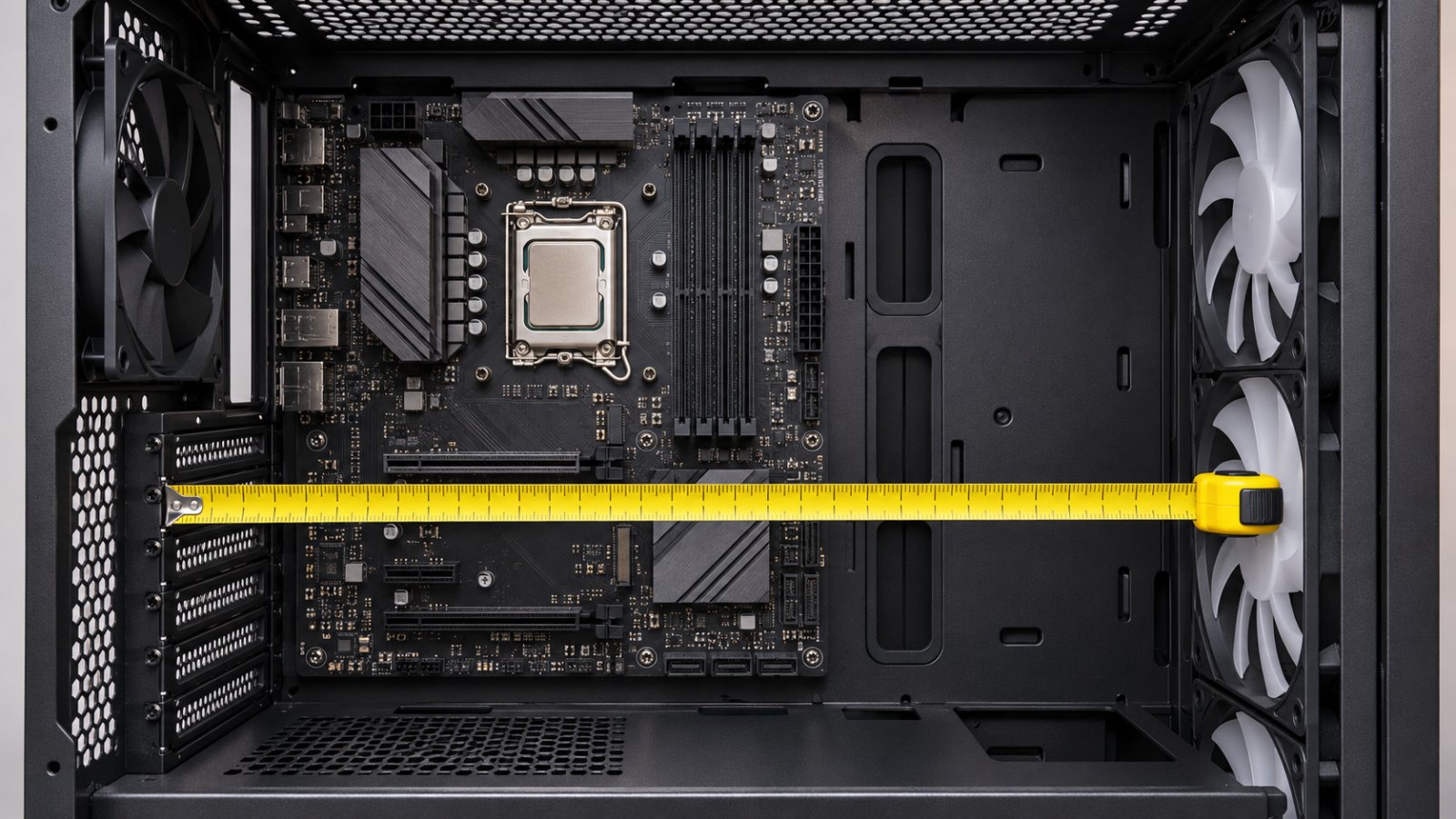
- Card length and thickness from the product page of the exact partner card, against the graphics card clearance your case lists. None of the sources here give card dimensions, and the versions with bigger coolers are the ones most likely not to fit, so this number has to come from the maker.

Hiroshi Tanabe
Hiroshi Tanabe shot wedding videos in Osaka for eight years. The cameras he bought back then, and some he regretted, are why he reviews them now. His tests of microphones and gimbals tend to run long, because he uses the...
View profileMore from Hiroshi Tanabe
View all →


Recommended for you
More stories →
Slim Magsafe Battery Pack Under $50

Which Samsung Z Fold 5 Screen Protector is Good That Doesn’t Peel
Which Anti-glare Privacy Filter for MacBook Pro 16-inch 2025 is Good?

Leave a Comment